
Interior first
Active water inside sets the order of work before cosmetic items enter the quote.
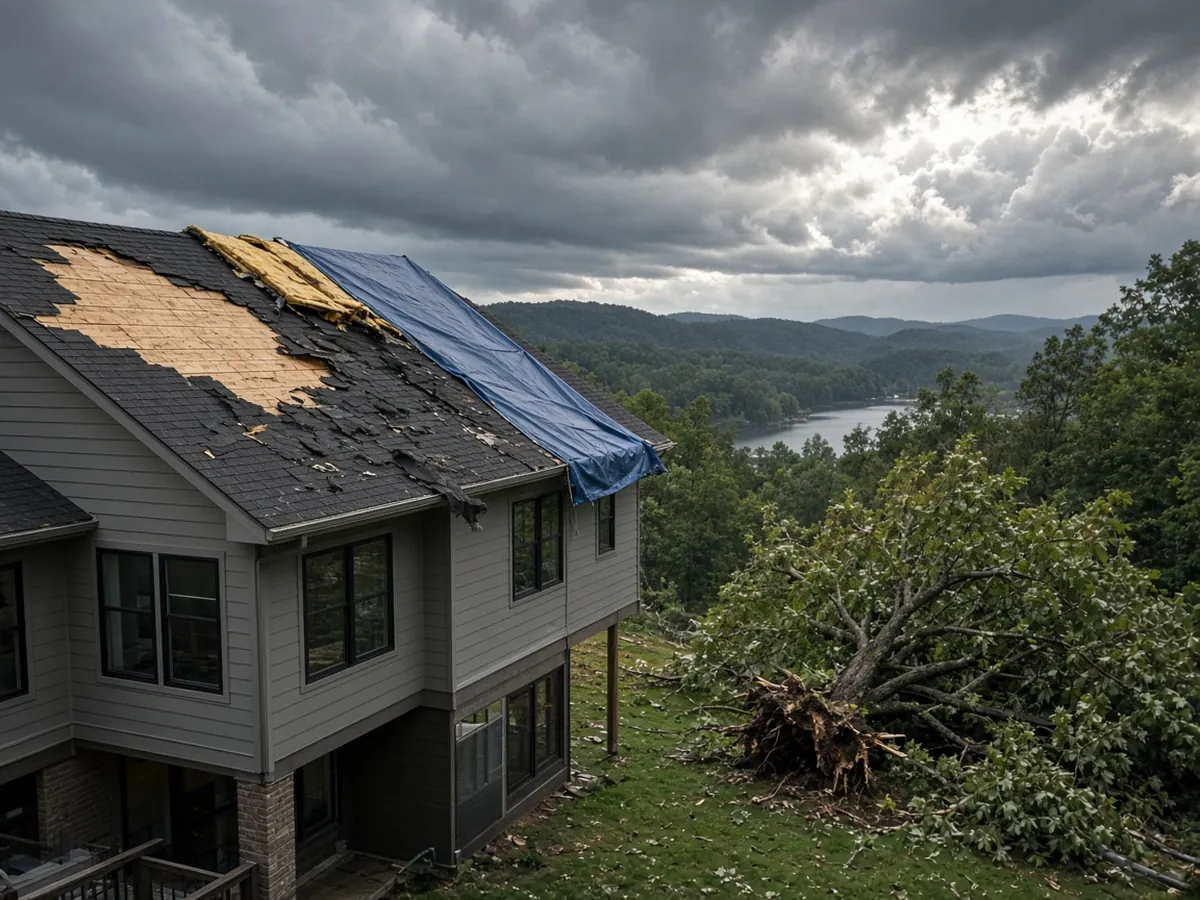
After a pine limb punches through shingles or wind peels a ridge cap on a Troutman ranch, staying dry comes first. Permanent repair follows a full walk, not only the puncture you can see from the yard.
Tree lines along field borders drop heavy limbs onto lower garage wings, while open lots take full gusts across long ranch ridges. Every elevation gets walked because trouble rarely stays on one face.
Finished rooms with active drips get membrane or board protection anchored to structure, not loose plastic that slides on wet tabs.
A puncture that looks thumb-sized from the ground can hide a longer split in the decking. We probe the impact area and photograph the attic side when the hatch is safe.
Twisted gutter runs can yank fascia loose even when field shingles look untouched. Edge metal goes on the same repair list as caps and valleys.
Quarter-mile gravel drives and gate closures affect how fast help arrives. Say on the form if limbs block the lane or a tractor is needed to clear access.
Branch marks and ceiling stains are described in everyday words for any carrier conversation you choose to have.
Detached shops and porch additions are walked with the main block because Iredell storms often land debris on the lowest plane first.
Hip and ridge lines get checked for lifted caps even when the front yard shows no obvious debris pile.
Stain locations indoors are tied to compass direction in the notes so adjusters can match them to exterior photos without a return trip.
Pasture fencing and gate latches matter when crews need to reach a remote wing; mention livestock or locked entries on the form.
Metal barn caps on the same farm lane are logged when wind peeled panels while the house roof stayed intact from the street view.
Roofing Lake Norman lines up the visit. Kaliber Roofing crews install temporary protection, then complete the permanent fix you approve in writing.
When shingles are on back order, temporary protection is rechecked and you hear the wait in plain language.
Flushing gutters after the event cuts the chance of a second leak at the fascia line.
Vents low on crawl foundations are worth a glance after hard rain because overflow and wind-driven spray often meet there.
Active water inside sets the order of work before cosmetic items enter the quote.
Decking damage is confirmed under punctures instead of assumed from curb view.
Gutter and fascia hits stay in the same plan as field shingles.
Stay off wet slopes. Describe active leaks on the form so anchors are planned correctly.
When it is safe, yes. Branch and deck damage stay documented before removal.
No. It keeps rooms dry until permanent shingles and flashing are scheduled.
Tell us if water is inside on the estimate form.