
Low-pressure method
Granules stay on the shingle, where they protect the roof.
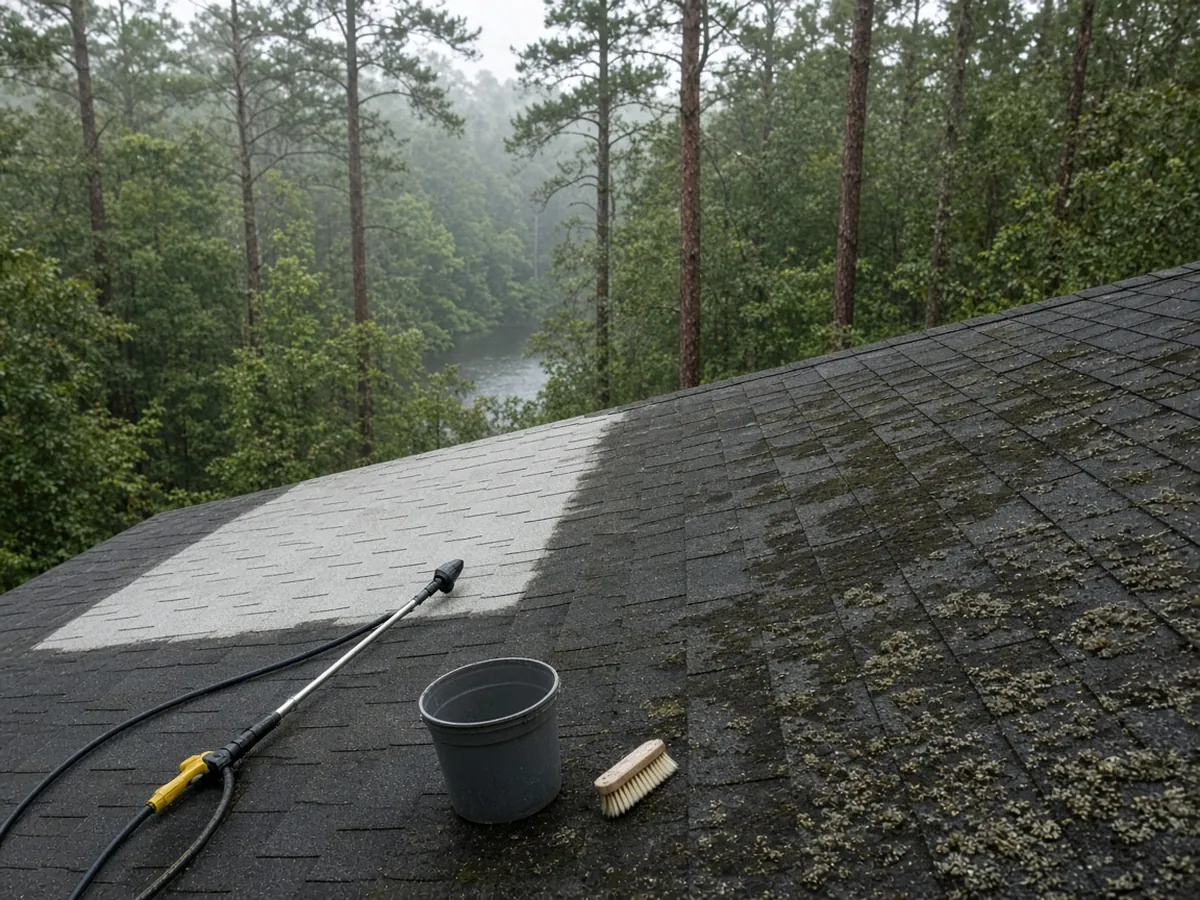
Algae and moss love humid north slopes from Lincoln coves to Mecklenburg tree belts. Gentle washing lifts growth without stripping granules and shows what the shingles look like underneath.
Algae streaks follow humidity. North slopes under heavy tree cover stay wet after dew and storms, so growth climbs from the eaves. Moss holds even more water and can lift shingle edges.
Pollen mats and leaf packs add seasonal layers that trap moisture in valleys and behind chimneys.
Washes use low pressure and growth-matched solutions so granules stay put. Landscapes, patios, and walks are rinsed and shielded.
Before-and-after photos show whether stains hid cracked tabs or tired flashing.
Roofing Lake Norman schedules cleaning. Kaliber Roofing crews perform the wash and call out leaks separately from cosmetic growth.
Trim back branches overhanging patios and north slopes so air can dry the cap between humid weeks.
Flush gutters after a wash so loosened needles and pollen do not dam the next storm.
Spring pollen and fall leaf mat need different solutions; the crew picks the method after identifying the stain.
Written follow-up notes list anything worth watching before the next growth season.
Granules stay on the shingle, where they protect the roof.
Plants and walkways are shielded and rinsed during the work.
Before and after images show what cleaning revealed.
No. Cleaning is surface maintenance. A leak needs a repair, and the inspection will show whether that is the case.
No. High pressure can strip granules and shorten shingle life. We use a low-pressure approach with a cleaning solution.
On shaded, damp roofs they can. Tree trimming and periodic cleaning help keep them away.
Use the estimate form to ask for a cleaning inspection and a written work plan.