
Full run checks
Pitch, hangers, seams, and downspouts are inspected, not just cleared.
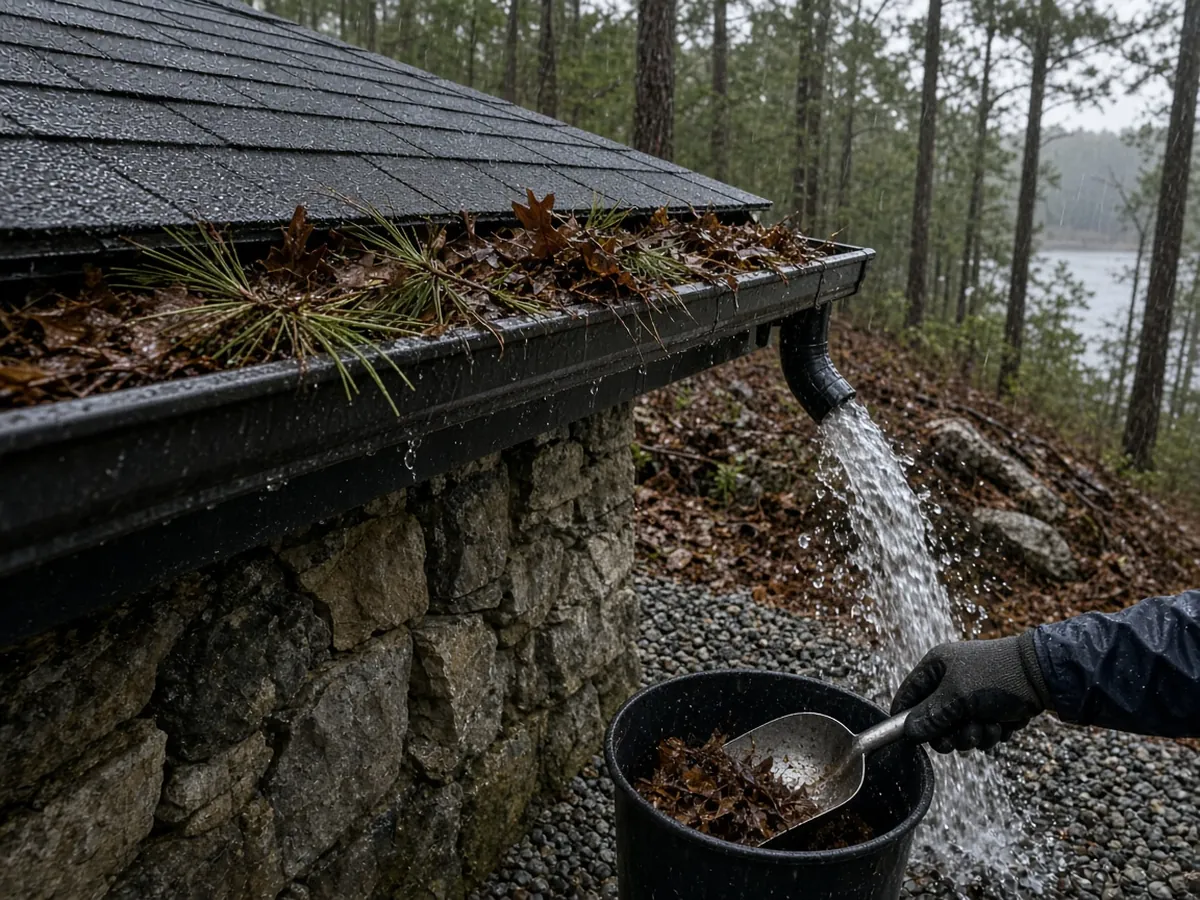
Gutters move roof runoff away from walls and crawl vents. When channels overflow or sag, stains often show up at fascia boards or foundations before owners blame the shingles.
Pine needles, acorns, helicopters, and pollen fill regional gutters most of the year. Packed runs overflow, rot fascia, stain siding, and dump water against foundations.
Clearing is step one. Pitch, hangers, seams, end caps, and leaders are tested afterward; standing water means sag or slope trouble, not just debris.
Downspout endings are reviewed so discharge avoids terraces, crawl vents, and shared walks.
Eave shingles and fascia get a ladder-side look so gutter work does not mask roof-edge failure.
Roofing Lake Norman schedules visits. Kaliber Roofing crews clean, reset, repair, and photograph completed runs.
Cove homes under pine and oak often need two clears a year; open-water lots may need one.
Guards reduce volume but still need periodic checks when fine grit packs behind screens.
Rusted seams and separated fascia are flagged before another patch season repeats.
Valleys that dump heavy flow into a short run may need splash guards or re-pitching.
Pitch, hangers, seams, and downspouts are inspected, not just cleared.
Downspout endings are reviewed so water moves away from the house.
Eave and fascia condition is recorded while we are up there.
It depends on the trees. Homes under heavy canopy often need more frequent cleaning than open lots.
A clogged downspout, a sagging section, or poor pitch can all cause it. A flush test shows which one it is.
No. They reduce it, but fine debris can still build up, and guards need occasional attention.
Tell us what you are seeing on the estimate form and we will set up a gutter check.