
Deck checked at tear-off
Rot and stain at the eaves are photographed and replaced before dry-in on lake-area roofs.
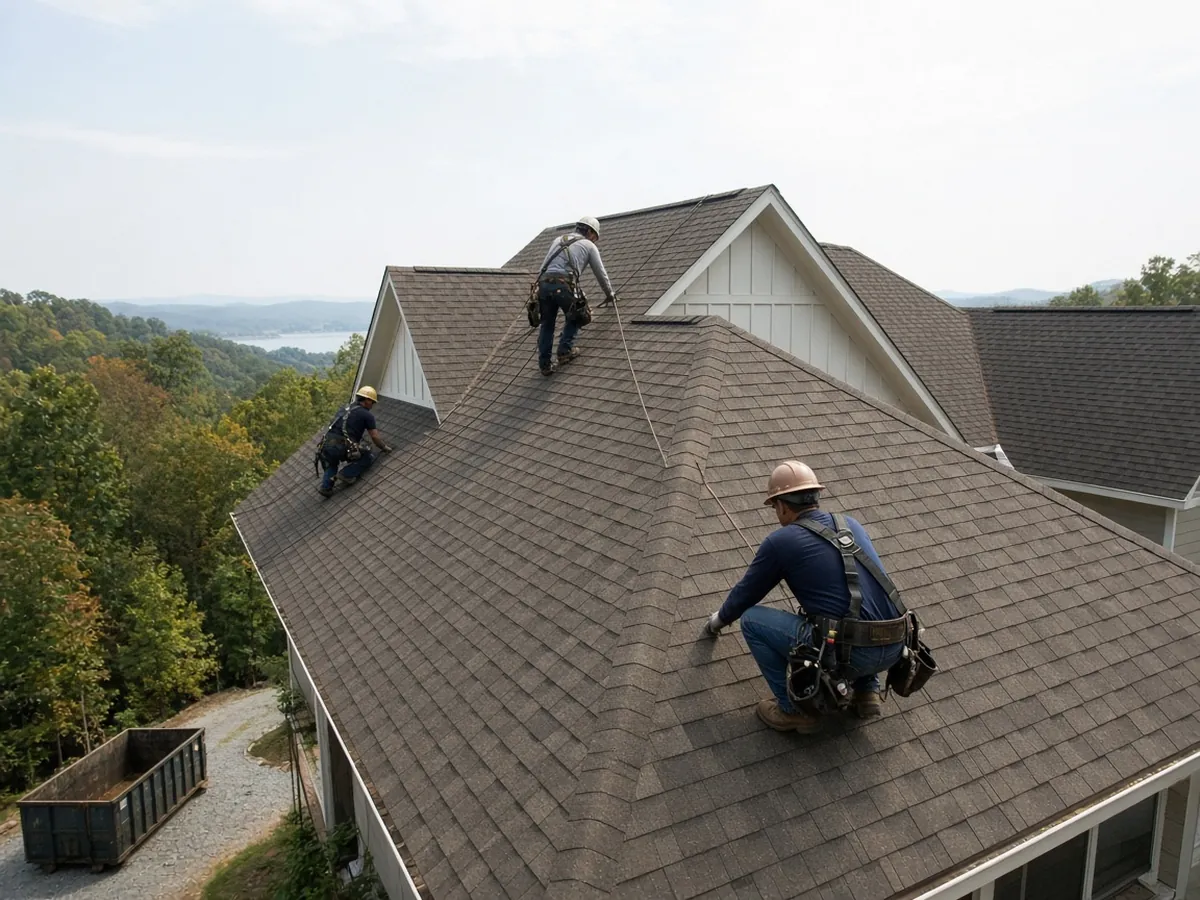
A full tear-off makes sense when granule loss and soft decking span multiple slopes, not when a single boot explains the stain. The inspection separates those paths.
Full tear-off enters the conversation when granule loss covers most slopes, tabs curl or crack across the field, eave decking feels soft, or patch history keeps opening new leaks every season. Lake-area roofs mix sunny-side fade with cove-side moss, so wear rarely looks even from the street.
Slope photos, valley metal, chimney flashing, and attic staining tell whether repair still has runway. If a targeted fix would hold, the plan says so. If the system is spent, the evidence is in the images rather than a pressure close.
Steep cove homes, east-shore subdivisions, and inland Cabarrus ranches each bring different tie-ins: dormers, porch lids, layered tear-offs, or thin builder vents that deserve correction at replacement.
Materials, underlayment, decking repair rules, ventilation balance, and cleanup paths are spelled out before the first shingle is ordered.
Roofing Lake Norman keeps scheduling questions on one thread. Kaliber Roofing crews tear off, dry in, install, and photograph finished slopes.
Walkways to the water, shared driveways, sloped yards, and overhead lines decide dumpster placement and carry paths. Those limits land on the work order early.
Close neighbors, HOA color charts, and weekend noise rules belong on the estimate form so crews are not improvising staging.
Closeout photos cover each slope plus a short list of items worth rechecking after the first season of pollen and leaves.
Ventilation, drip edge, and ice-and-water details are listed in the quote, not left to field guesses, because gusts off open water test edges harder than inland lots.
Weather sequences are explained before tear-off begins, including how open sections are dried in if a storm moves through mid-job.
Tear-off exposes hidden deck rot; the plan states how soft boards are handled and when you are consulted before work continues.
Rot and stain at the eaves are photographed and replaced before dry-in on lake-area roofs.
Ridge, soffit, and cove airflow are reviewed when attics have stayed damp.
Shingles, underlayment, flashing, and staging limits are set before tear-off day.
Repair works when the problem is local, such as one failed boot or a lifted tab. Replacement makes sense when wear covers most slopes or the deck is compromised. The photos from the inspection show which case you have.
We plan for it. Tarps, drop zones, and a magnet sweep are part of the plan, and we note delicate plantings and walkways before work starts.
Work plan and weather decide that. The written plan explains the sequence, and open sections are dried in if weather interrupts the job.
Use the estimate form to request an inspection and a written work plan for your roof.