
Water stopped first
Active leaks get a temporary cover before routine work.
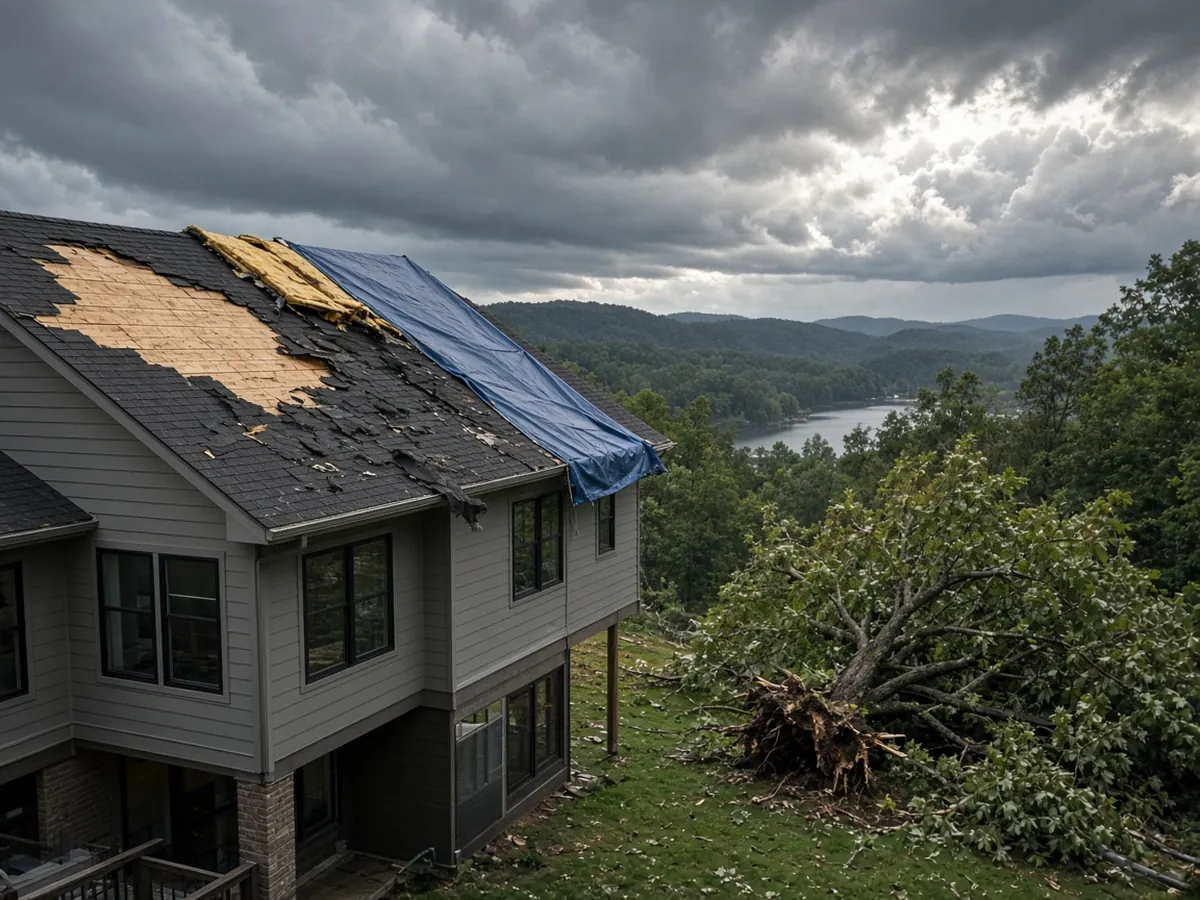
When storms cross the reservoir and open a roof, finished rooms are protected first. Permanent repair plan waits for a dry walk and a mapped elevation list.
Protect finished rooms first when water is moving. Then flag active leaks on the estimate form so covers can be prioritized ahead of routine inspections.
Stay off slick shingles. Note when the storm hit and whether branches are still on the roof; crews document the scene on arrival.
Tarps anchor to framing, not loose weights. They are bridges to permanent repair, not a season-long fix.
After weather breaks, every elevation is walked. Wind lift and limb strikes often hide on faces opposite the obvious damage.
Roofing Lake Norman sequences temporary and permanent work. Kaliber Roofing crews photograph each step for your records or carrier.
Channel gusts can crease tabs on lake-facing roof edges while inland elevations still look smooth from the yard.
Limbs on cove homes often damage more than one plane; each hit is listed separately.
Matching colors on older lake-area roofs can delay permanent work; lead times are stated in the plan.
Door-knocker offers spike after regional events; plan in writing from Roofing Lake Norman and field work from Kaliber crews keeps roles clear.
Active leaks get a temporary cover before routine work.
Every slope is checked, not only the one with the visible damage.
Records from each step are organized in case you file with your carrier.
No. Wet shingles and loose debris make roofs dangerous. Describe stains and symptoms on the estimate form so we can plan safely.
No. It keeps water out until a permanent repair can be done, and it should be replaced with real repair work.
That is your decision. We document the damage clearly either way so you can decide with good information.
Tell us on the estimate form whether water is coming in and we will take it from there.