
Cause before cure
We trace the leak to its entry point before anything is patched or sealed.
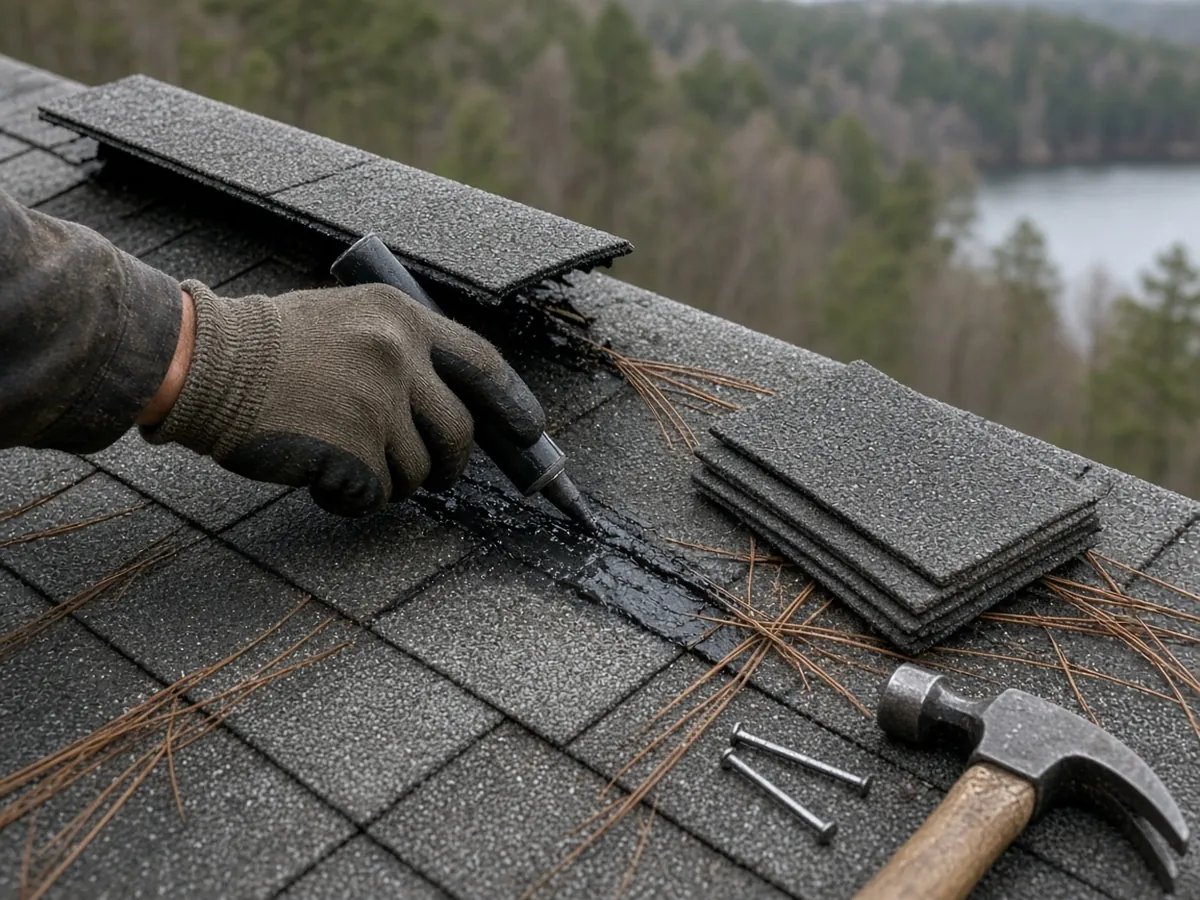
Stains on ceilings in lake-area homes seldom sit under the opening. Repairs trace uphill through decking and flashing until the real entry point is photographed.
Ceiling stains rarely sit under the hole. Moisture tracks along decking and rafters, so hallway marks may start at a boot several feet upslope. Attic and roof checks run together across boots, wall flashing, valleys, ridge metal, skylight curbs, and wind-lifted tabs.
Canopy debris is a regional constant: needles, acorns, and leaf mats dam valleys, while limbs scar granules along rub lines. Porch tie-ins and second-story walls fail when counter flashing dries out.
Repairs stay right-sized: one failed boot gets a new boot; brittle neighbors are named before nails go in so you can choose a wider fix or a replacement plan.
Before-and-after photos document what changed. Keep them for HOAs, landlords, insurers, or your own timeline.
Roofing Lake Norman schedules repair visits. Kaliber Roofing crews perform the work, and temporary covers go up when more rain is expected before permanent seal can set.
Each fix is keyed to a slope and a landmark you can spot from the yard, such as the lake-side chimney or the garage valley.
Color match is described honestly on faded roofs before work starts.
Non-leaking wear is listed without urgency attached.
Long-running leaks may have soaked insulation or deck boards; attic notes call that out when it affects the repair.
Urgent water entry is scheduled ahead of slow stains, subject to dry footing and safe ladders.
Fan vents dumping into attics and plumbing stacks can mimic roof leaks; the inspection sorts those when symptoms overlap.
Stopgap repairs are labeled stopgaps when replacement is the better spend.
Chimneys, skylights, and wall transitions stay the focus because they fail more often than open field shingles.
We trace the leak to its entry point before anything is patched or sealed.
A local problem gets a local repair, and a failing roof gets an honest conversation.
You keep a record of what was found and what was changed.
A temporary cover is possible in many conditions. Permanent repairs usually wait for dry shingles and safe footing.
Water can travel a long way along framing before it appears. The entry point is often uphill and out of sight from the ground.
We match shingle style and color as closely as we can. Faded older roofs may show a visible difference until the new shingles weather.
Describe the stain and where it appears on the estimate form so the inspection can start in the right place.