
Field-wind edges
Starters and drip edge along exposed roof edges are renewed with the tear-off, not as a late add-on.
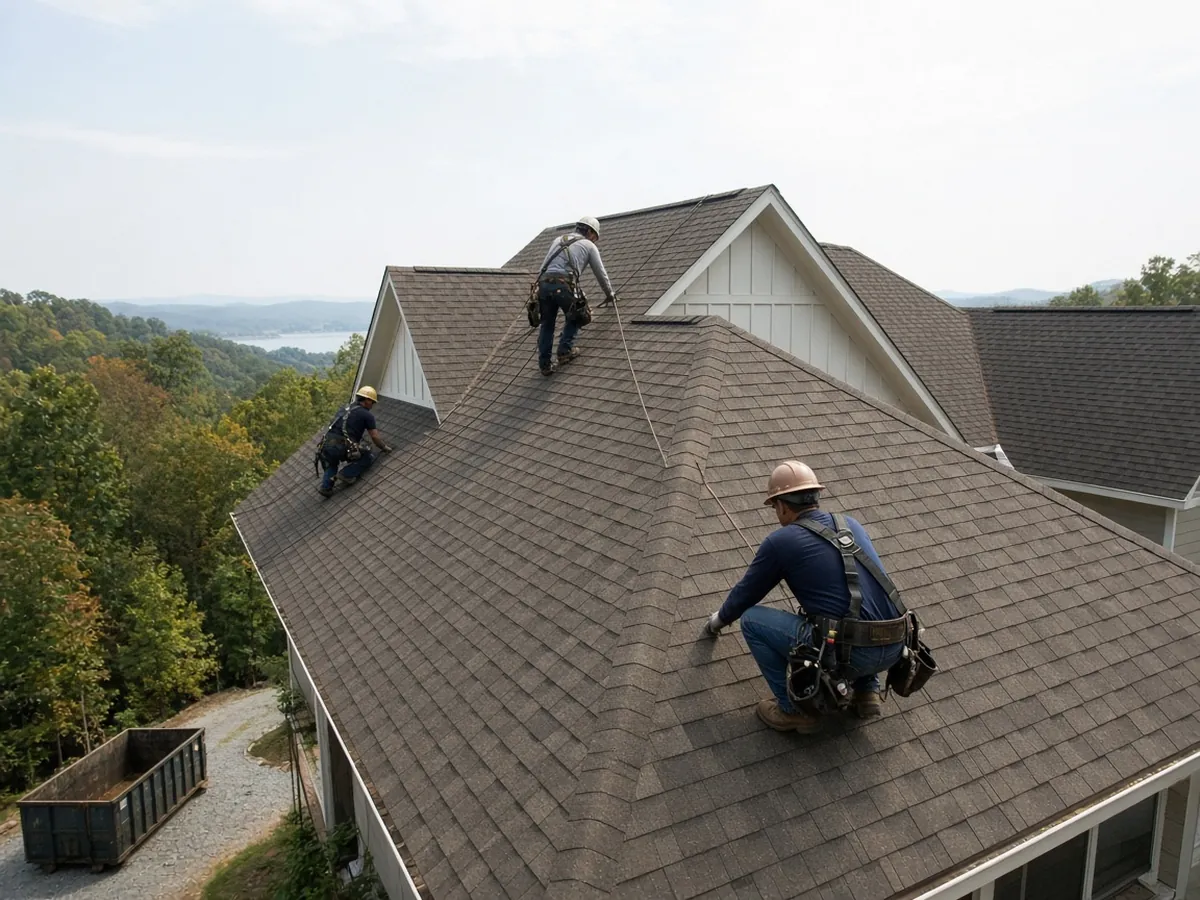
When patches no longer hold on a Troutman cap and granules pile in the gutters each spring, a coordinated tear-off is usually calmer than chasing the next stain across a long ranch ridge or farmhouse wing.
Open fields can lift starter courses along west roof edges while wooded lots stay damp at the eaves. Edge metal, drip edge, and starters are renewed as part of the base quote, not patched after install.
Pine shade rots lower decking on north slopes that looked solid from the yard. Tear-off exposes dark nail lines and spongy boards; the written plan states how much deck repair to expect before dry-in.
Older downtown homes may keep sound valley metal while field shingles fail. The plan notes retained metal versus full valley replacement so materials are not double-ordered.
Gravel drives and quarter-mile lanes may force bundles to stage at the road. Labor and carry time appear plainly in the quote instead of surprising you on install day.
Ranch plans from the 1970s often lack balanced ridge venting for today's insulation. Soffit and ridge airflow are reviewed before shingles are ordered.
Chimneys, skylights, porch tie-ins, and detached garage wings each get new step flashing rather than bent-back pieces from the old system.
Branches scraping new tabs every windy afternoon should be trimmed before closeout. The plan lists limbs to cut so the first season is not wasted on scrapes.
Color choice, dumpster placement, and work-hour limits are confirmed before a date is set on Troutman streets with tight setbacks.
Insulation baffles and ridge layout are confirmed when attics already run hot in July on ranch caps with limited soffit intake.
Roofing Lake Norman holds the calendar. Kaliber Roofing crews remove the old roof, fix the deck, install the new system, and document each elevation when the job closes.
You choose shingle type, underlayment, and ventilation upgrades in the written work plan before anything is ordered.
Closeout includes images of each finished elevation and notes on tree limbs that still hang close to the new plane.
Detached shops or barns on the same parcel can share a tear-off week when you list them early on the form.
Starters and drip edge along exposed roof edges are renewed with the tear-off, not as a late add-on.
Soft boards under pine-shaded lower courses are cut out before new shingles cover them.
Long-drive staging and hand-carry labor are listed when trucks cannot sit at the eave.
Sometimes, when color match and ridge flashing allow. The inspection compares partial work against a full tear-off.
Describe each structure on the form. Plan may split house and outbuilding for clarity.
Images of each slope plus tear-off notes, including any deck boards that were cut out and replaced.
Share sheet-metal and shingle rules on the form so samples match before order.
Request an inspection on the estimate form.