
Drains cleared
Clogged bowls and leaders are opened before anyone proposes a membrane patch.
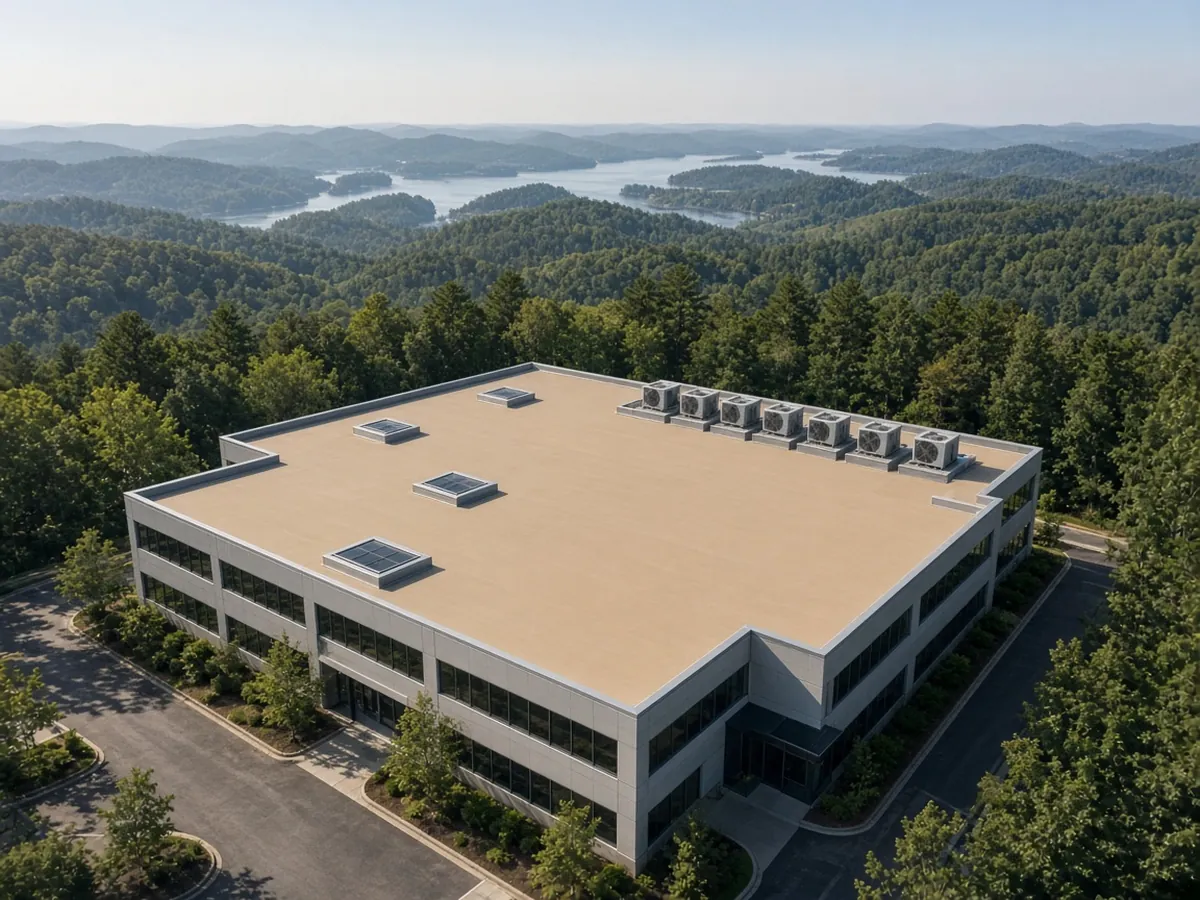
Shops and offices along Troutman's NC-115 corridor need low-slope systems that stay dry through Piedmont downpours without shutting the doors for a week. Work is phased around customers and the limited parking out front.
Strip centers and standalone retail pads are often single story with parapet walls and internal drains. Each bowl is photographed for cracks, debris, and ponding marks after rain.
Older membranes may carry patches from prior leaks. The walk maps original membrane versus later additions so new welds bond to the right layer.
Parking in front of a storefront is tight. Ladder zones and material lifts are planned so customers can still reach the entrance during business hours.
HVAC housings on flat retail roofs split seams when vibration works flashings loose. We photograph curbs before blaming the field membrane alone.
Section repairs let staff keep working while one bay is open. Noisy adhesive work can be placed around hours you name on the estimate form.
Reports split by bay or suite when needed, so each tenant reads only the risk above their ceiling.
Coping joints and parapet corners are checked where driven rain enters wall cavities instead of exiting the roof plane.
Ceiling tiles stained near the front register often trace to a scupper or leader, not the middle of the roof. Drainage photos come first in those cases.
Night condensation on small NC-115 buildings can show as interior spots before owners see splits at the parapet.
Weekend traffic on NC-115 influences how early deliveries and noisy work can start without disrupting the breakfast crowd next door.
Tobacco-era warehouses converted to storage sometimes combine flat and mansard edges; each junction is noted before weld or patch work.
Roofing Lake Norman aligns timing with owners and managers. Kaliber Roofing crews complete the approved low-slope work and hand off photos plus a short summary.
Standing water in a bowl usually means slope or leader trouble before the membrane is blamed.
Coating, patch, and partial replacement options are described without a roofing glossary.
Delivery schedules that run under a leaking corner are noted so repairs can phase around receiving hours.
Clogged bowls and leaders are opened before anyone proposes a membrane patch.
Work zones avoid main doors when possible so the business stays usable.
Old repairs are noted so new adhesives bond correctly.
Often yes. Bays can be phased so retail traffic keeps moving while another section is open.
We photograph and name what is on the roof, then suggest repair methods that bond to that system.
Yes. Prior repairs are listed in the report so nobody welds over the wrong layer.
Describe the building and the problem on the estimate form.