
Active leaks first
Covers go over wet interior spots before non-urgent items are quoted.
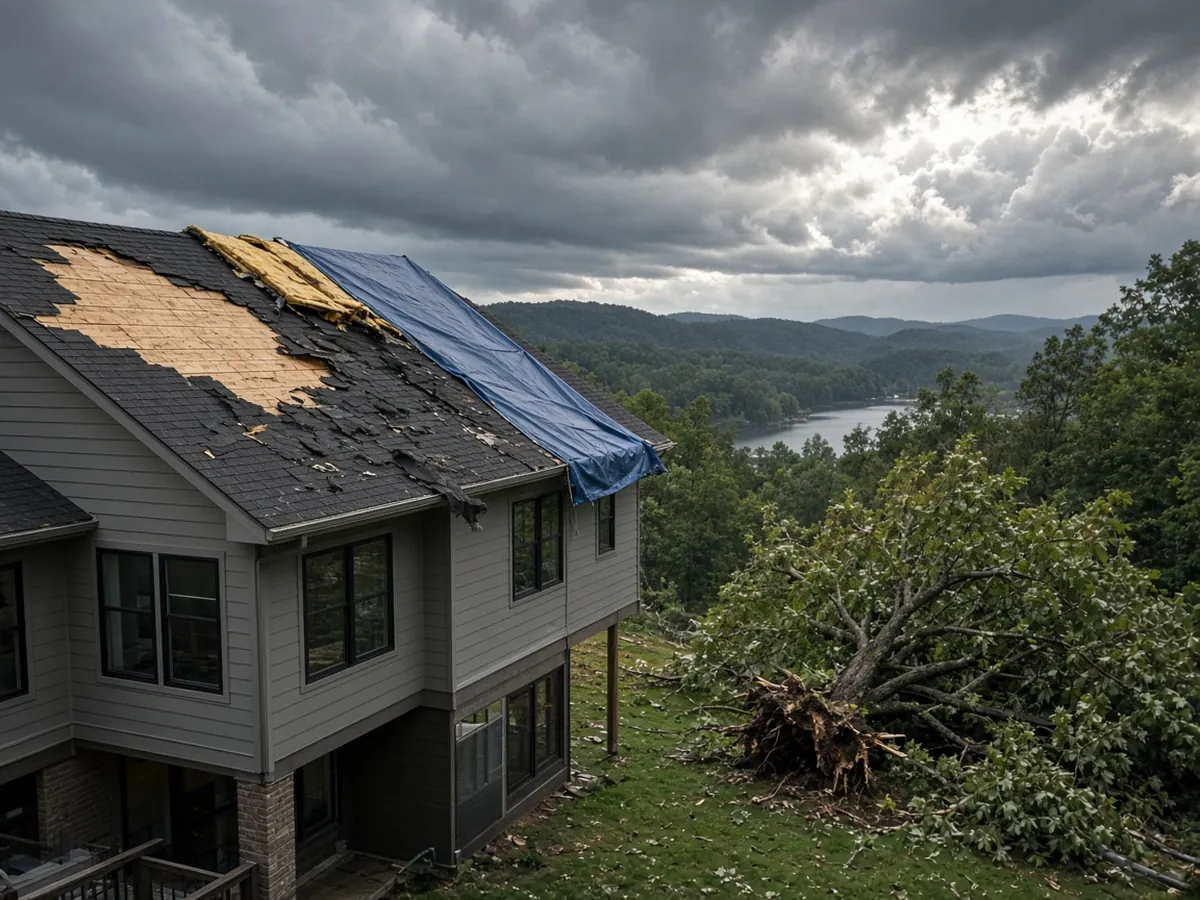
When a limb comes down on a Terrell roof or wind strips a ridge, the first job is keeping water out. Permanent repair follows a walk of the whole roof, not only the visible hole.
Mature oaks and pines drop big limbs in thunderstorms, and a single branch can break shingles, split decking, and bend a gutter run in one hit. Stay off the roof and note on the estimate form where the debris landed.
If water is coming inside, say so on the form. Temporary covers go on those spots first and are fastened to solid framing, not left loose on a wet slope.
A small puncture can hide cracked boards underneath. We look at the full impact area and the roof edge around it, then check the attic side when access is safe.
Wind damage may sit on a different slope from the fallen limb. Every face is walked, because wind lift can crease tabs on the far side of the house where nothing fell.
Long driveways and narrow lanes are common here, so tell us if a fallen tree is blocking access. The crew plans around it and does not move heavy limbs without a plan for the roof beneath.
Limbs on the roof and interior stains are logged in plain language for any claim you choose to file. The written plan lists each damaged area on its own line.
Deep lots along NC-150 may delay truck access; the plan lists carry time when a crew cannot park beside the eave.
Roofing Lake Norman coordinates the visit. Kaliber Roofing crews place temporary covers and complete the permanent repair.
If weather delays the permanent repair, we keep temporary covers inspected and tell you the timeline plainly.
Once the roof is sound, flush the gutters. Storm debris left in them can back water under new shingles at the eave.
Long Terrell driveways mean owners sometimes meet crews at the road, so access notes avoid a wasted trip.
Covers go over wet interior spots before non-urgent items are quoted.
Hidden deck damage is checked well beyond the point of impact.
Each damaged area is listed separately so nothing is inflated or missed.
No. Describe it on the form and let the crew document and remove it safely, since the shingles under a limb are often damaged in ways you cannot see.
No. It holds water out until permanent repair is scheduled.
Then the plan covers one slope. We list what failed and leave sound areas alone.
Tell us on the estimate form if water is inside, where limbs landed, and whether the drive is blocked.