
Dated slope photos
Each image carries a location, a direction, and a date.
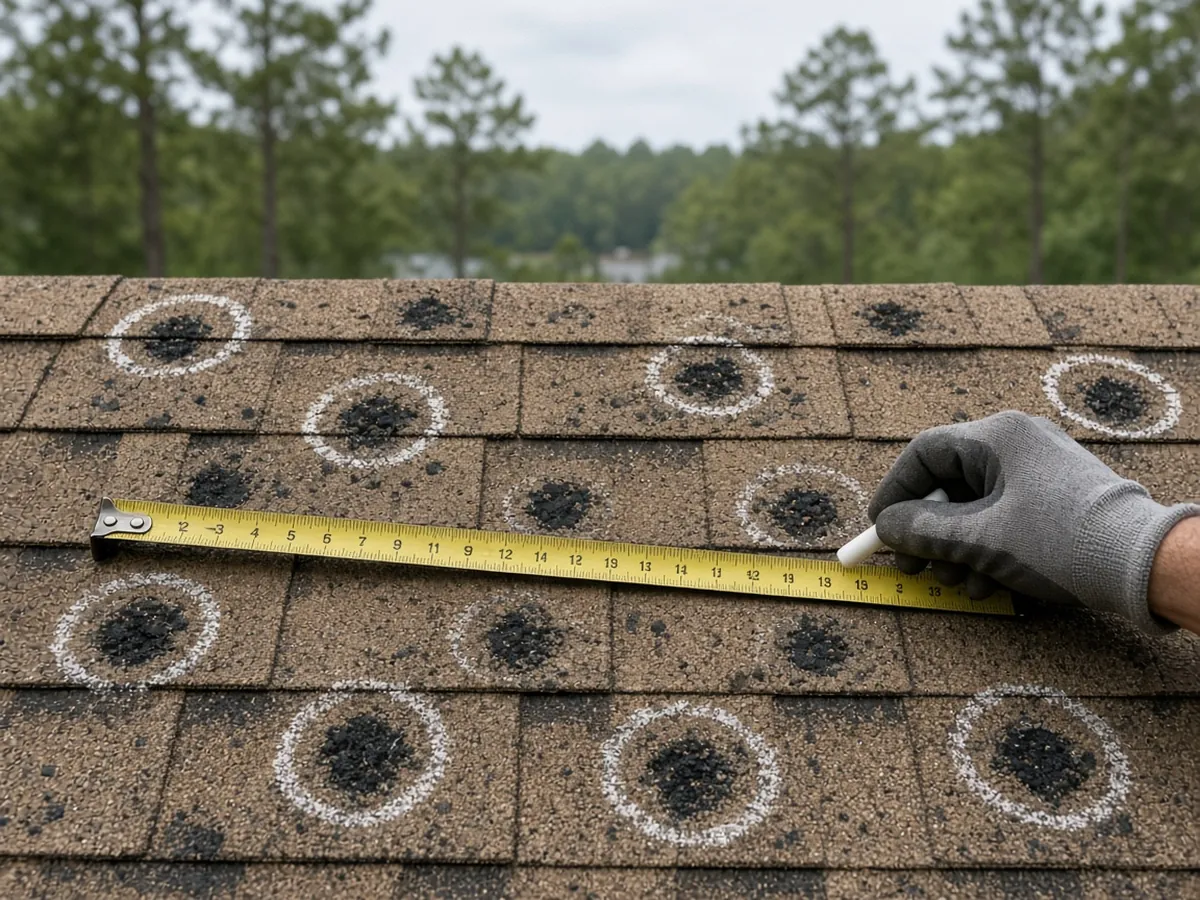
A claim file helps only when the photos show what the last storm did. Under Terrell trees that means keeping fresh limb and wind damage apart from the slow wear shade leaves behind.
Limb strikes leave crushed shingles, cracked decking, and bent flashing at a clear point of impact. Wind leaves creased tabs and stripped edges along roof edges. Each pattern is photographed with a date.
Every image is tied to a slope and a compass direction, with a wide shot and a close shot. An adjuster can match an interior stain to the outside damage much faster with that map in hand.
Shaded roofs carry plenty of damage that is not storm-related: algae streaks, moss at the tab edges, patchy granule loss. We label that wear plainly so the storm portion of the file stays credible.
Soft metals are photographed because vents, drip edge, and gutters often show dents before the shingles do, and carriers may treat them as separate line items.
We do not read policy language or negotiate coverage. If an adjuster visit is scheduled, tell us the time on the estimate form and we can plan to be on site.
If the damage turns out to be minor, we say so before you spend a deductible on a repair-sized problem.
Quiet shore pockets see less daily wind than Mooresville corridors, so limb strikes and packed valleys are often the dominant storm story on the file.
After approval, Roofing Lake Norman schedules the work and Kaliber Roofing crews complete the work plan and photograph the finished roof.
The photos and notes are yours to share with an agent, a lender, or a neighbor whether you file or not.
When a limb is still on the roof, we document its position and the shingles beneath it before anything is moved.
Quiet shore humidity can keep moss in the same file as hail unless it is labeled on damp north slopes first.
Each image carries a location, a direction, and a date.
Shade wear is called out so storm damage stands on its own.
Vents, drip edge, and gutters are photographed beside the shingles.
Yes. If the roof shows mostly age and shade wear, we say so and you decide what comes next.
We document what the limb did to the roof. Your carrier decides how your policy treats it.
No. The inspection record is yours either way, and filing is a separate decision between you and your agent.
Add the storm date on the estimate form and describe any interior stains so photos can be matched to slopes.