
Drainage mapped
Ponding and clogged scuppers are addressed before any surface patch is proposed.
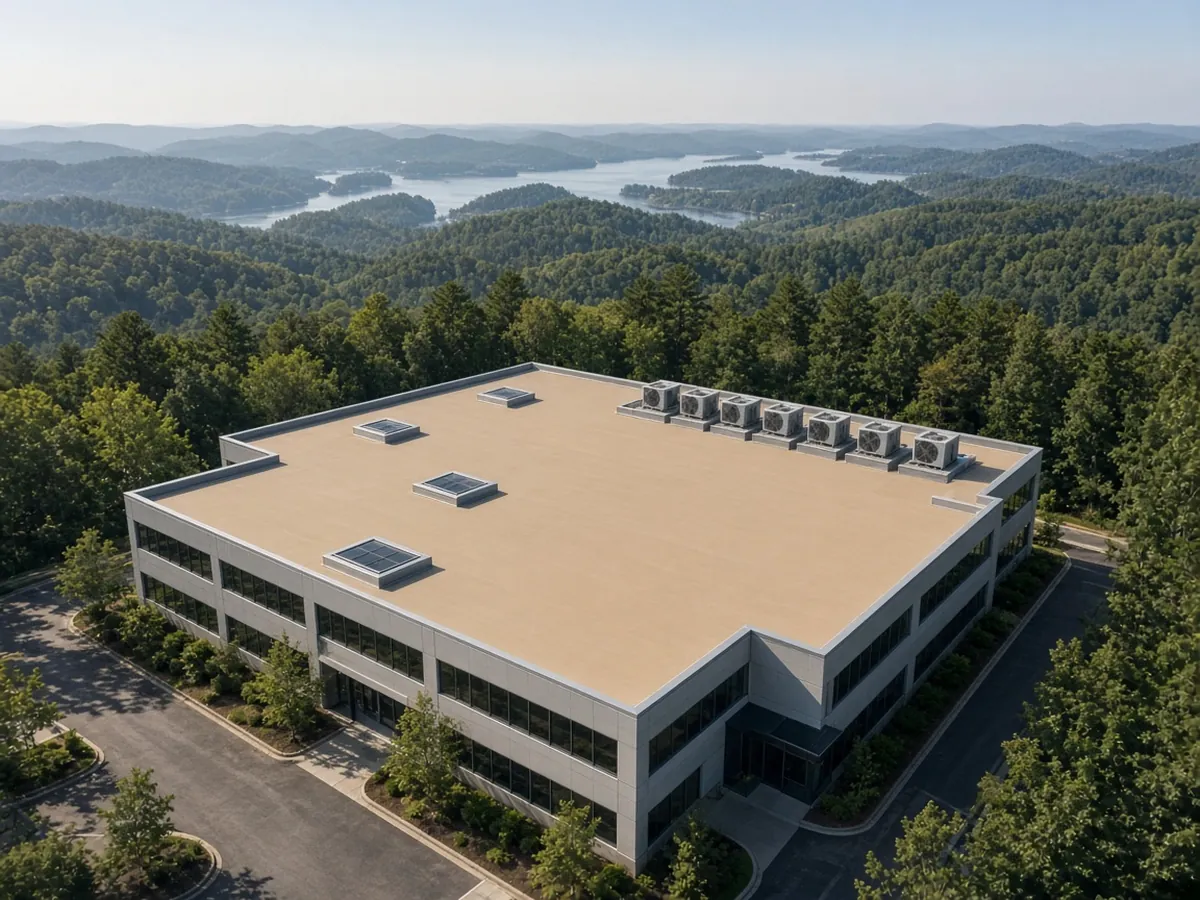
Small commercial buildings near NC-150 in Terrell rarely have a spare week to give up. Low-slope work here is planned around the people using the building and the trees growing beside it.
A flat or low-slope roof under mature trees collects leaves in drains, scuppers, and corners. Water that cannot leave the roof sits on the membrane, and ponding is where seams start to open.
Our first pass looks at drainage: where water stands after rain, whether scuppers are clear, and whether coping and edge metal still sit tight. Photos of standing-water marks go into the report before any fix is priced.
Overhanging limbs rub membranes and drop debris all year. We note which branches reach the roof and whether sap, needles, or fine grit is staining or abrading the surface.
Rooftop units, vent curbs, and pipe penetrations are documented too. Blistered membrane near an HVAC curb often points to trapped moisture, and the report separates that from surface wear.
Terrell is quieter than the big corridors, which helps with staging, but lots can be tight or shared. Ladder access, material lifts, and crew parking are mapped before work starts so customers can still reach the door.
Repairs can be done in sections, one bay at a time, so the rest of the building stays dry. Adhesive-heavy or noisy tasks can be placed around the hours you name on the estimate form.
Pine needles that mat in roof drains on Terrell commercial buildings are cleared before any membrane patch is priced.
Roofing Lake Norman coordinates with owners and managers. Kaliber Roofing crews perform the work and leave photos with a short written summary.
Findings are written in plain language so an owner, manager, or tenant can follow them without a roofing glossary.
Interior drip pans can mark active leaks while permanent repairs cure on the low-slope sections.
Residential downspouts that tie into a shop leader are photographed so the next rain does not cross properties.
Ponding and clogged scuppers are addressed before any surface patch is proposed.
The building stays open while repairs move bay by bay.
Limbs touching the membrane are photographed and listed in the plan.
Yes. Name your quiet hours on the estimate form and we plan noisy or odor-heavy tasks around them.
Yes. Single-tenant and multi-tenant low-slope roofs are both included, including detached storage or service buildings.
We photograph the layers we can see and list them, so the next repair is not a guess stacked on earlier ones.
Describe the building and the problem on the estimate form. Note NC-150 access and any trees overhanging the low-slope roof.