
Flow tested
Water runs through every section before the crew leaves.
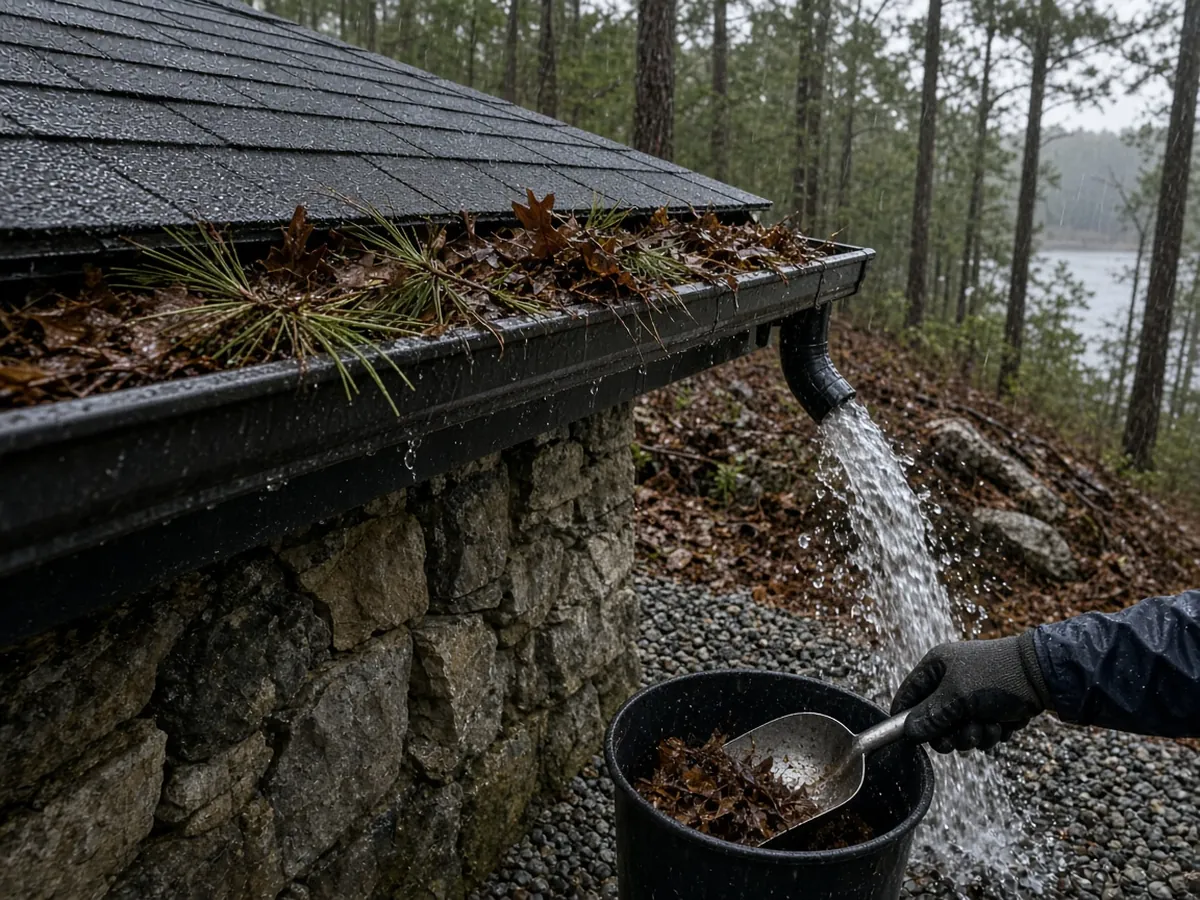
Oak leaves, pine needles, seed pods, and shingle grit fill Terrell gutters quickly. Overflow stains siding, soaks foundation beds, and sends water back toward the roof edge.
A packed gutter holds water and wet debris, and the weight pulls hangers loose. The run sags, the pitch reverses, and overflow lands exactly where the downspout was meant to carry it away.
We scoop out the debris, then run water through each section. Standing water means a pitch problem, and a backup at a corner usually means a clogged elbow or a crushed downspout.
Because trees keep the roof edge damp, fascia boards behind the gutters can stay wet for seasons. We note rot or separation seen from the ladder before screws go back into soft wood.
Downspouts need to discharge away from the house. Missing extensions and splash blocks are listed, along with spots where runoff heads toward a crawl vent or a low corner of the yard.
Long lots mean long runs and sometimes more than one downspout is needed to keep a single outlet from overloading in a heavy rain. We say when a run is asking too much of one outlet.
Rust-through seams and sagging sections are compared with partial replacement, because another round of sealant is not always the cheaper answer.
Quiet shore traffic means crews can often work mid-morning without road noise, but long driveways still need turnaround notes on the work order.
Roofing Lake Norman schedules gutter work. Kaliber Roofing crews clean, repair, and flag roof-edge problems they see from the ladder.
After the first visit we can tell how quickly your gutters refill, and heavily shaded lots often need attention in spring and again after leaf drop.
Gutter guards cut the volume of debris, but needles and fine grit still get through, and we explain the trade-off on site.
Mature canopy sheds heavy fall drops, so the first cleaning after leaf season includes an extra downspout flush.
Water runs through every section before the crew leaves.
Outlets and extensions are checked so water leaves the foundation area.
Rot or separation at the roof edge is recorded with photos.
They reduce it but do not end it. Fine debris still collects, so guarded gutters still need an occasional check.
Yes. Water can back up under the shingles at the eave and soften the decking, so we note roof-edge condition while cleaning.
Standing water after a flush is the sign. We reset hangers or note when a run needs replacement.
Tell us what you are seeing on the estimate form, including overflow spots and how long the driveway is.