
Granule-safe wash
Pressure stays low enough to protect the shingle surface.
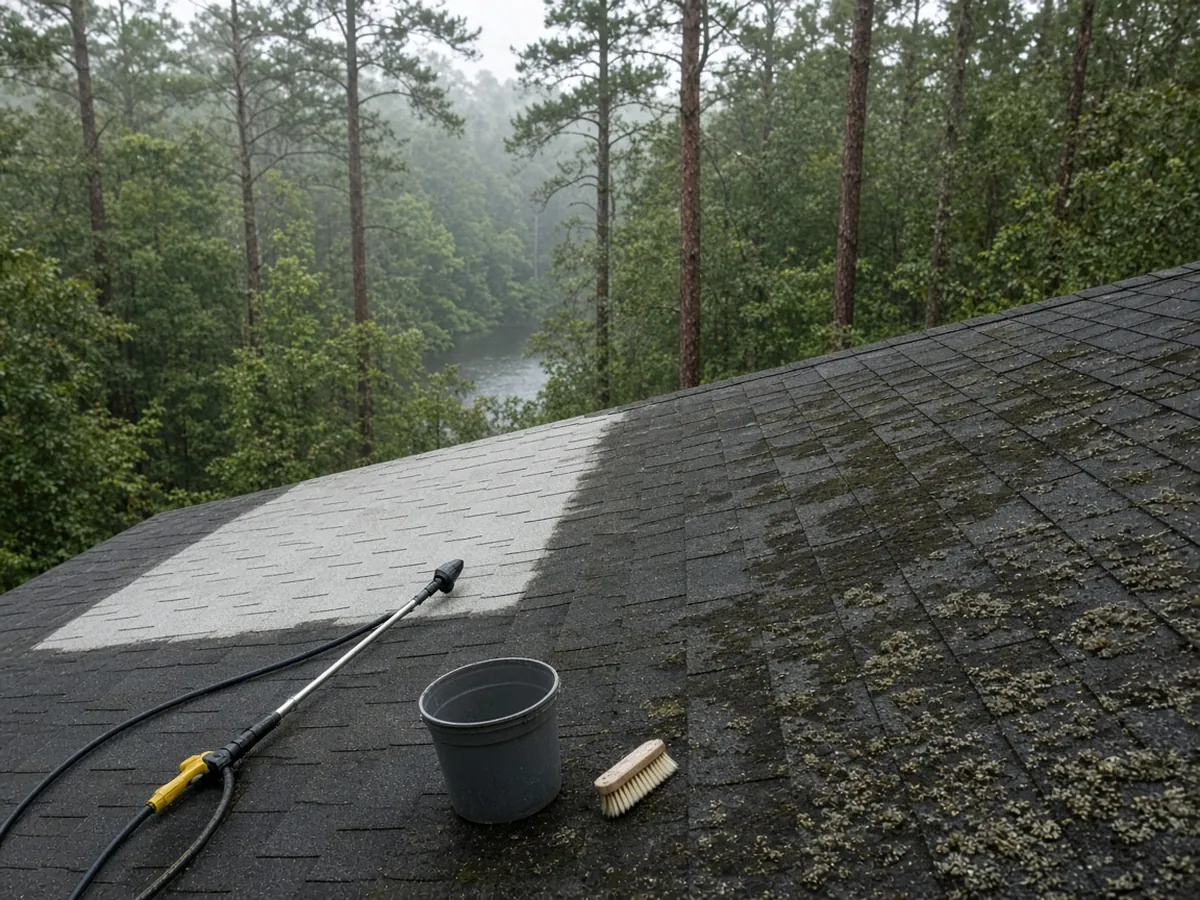
Denver's mix of lake breeze and forest shade leaves north slopes streaked while south slopes only look dull. Cleaning clears the growth and shows what shape the shingles are in underneath.
Algae needs moisture and shade. Cove lots and tree tunnels provide both, so streaks spread across north faces while the lake side still looks acceptable from the street.
We use low pressure and a solution suited to the growth. High-pressure washing strips granules and shortens roof life, so we do not use it on asphalt shingles.
Moss is lifted carefully because pulling it dry can take granules with it. Thick patches are softened first and rinsed along the shingle courses.
Decking, siding, stone walks, and lake-facing landscaping are covered and rinsed. Runoff is directed away from beds before the wash starts.
Cleaning often reveals thin tabs or failed flashing under the green film. Those photos reach you before any repair is quoted.
Cleaning is maintenance, not leak repair. If a stain inside points to active water entry, we say so plainly.
Roofing Lake Norman books the visit. Kaliber Roofing crews handle the wash and note any leak stains separately.
Log siding and stone walks are shielded from runoff so a wash does not stain wood or mortar joints below the eaves.
North slopes that face the forest often need a follow-up pace suggestion because canopy keeps them damp between washes.
Homes along Highway 73 between wooded coves and cleared lake points often show algae on the north run only. We photograph that contrast so you know whether one slope or the full roof needs the next service visit.
Weekend lake traffic on side streets can limit hose reach on long drives. The plan lists which face we wash first when only one side can be serviced before guests arrive.
Trimming back branches slows regrowth more than annual chemical wash alone on wooded Denver lots.
Gutters are flushed so loosened moss does not dam the next rain at the eave.
Lake breeze can dry the south face while the north slope is still wet, so wash timing is planned slope by slope.
Pressure stays low enough to protect the shingle surface.
Landscaping and walks are covered and rinsed during the work.
Before-and-after photos show what the growth had been covering.
Many need attention every one to two years. We suggest timing after the first job.
No. If water is getting in, the inspection points to repair instead of washing alone.
Brittle tabs are noted before wash. We stop if shingles cannot handle it.
Use the estimate form to request a cleaning visit.