
Drains cleared
Bowl and leader blockages are addressed before surface patches are proposed.
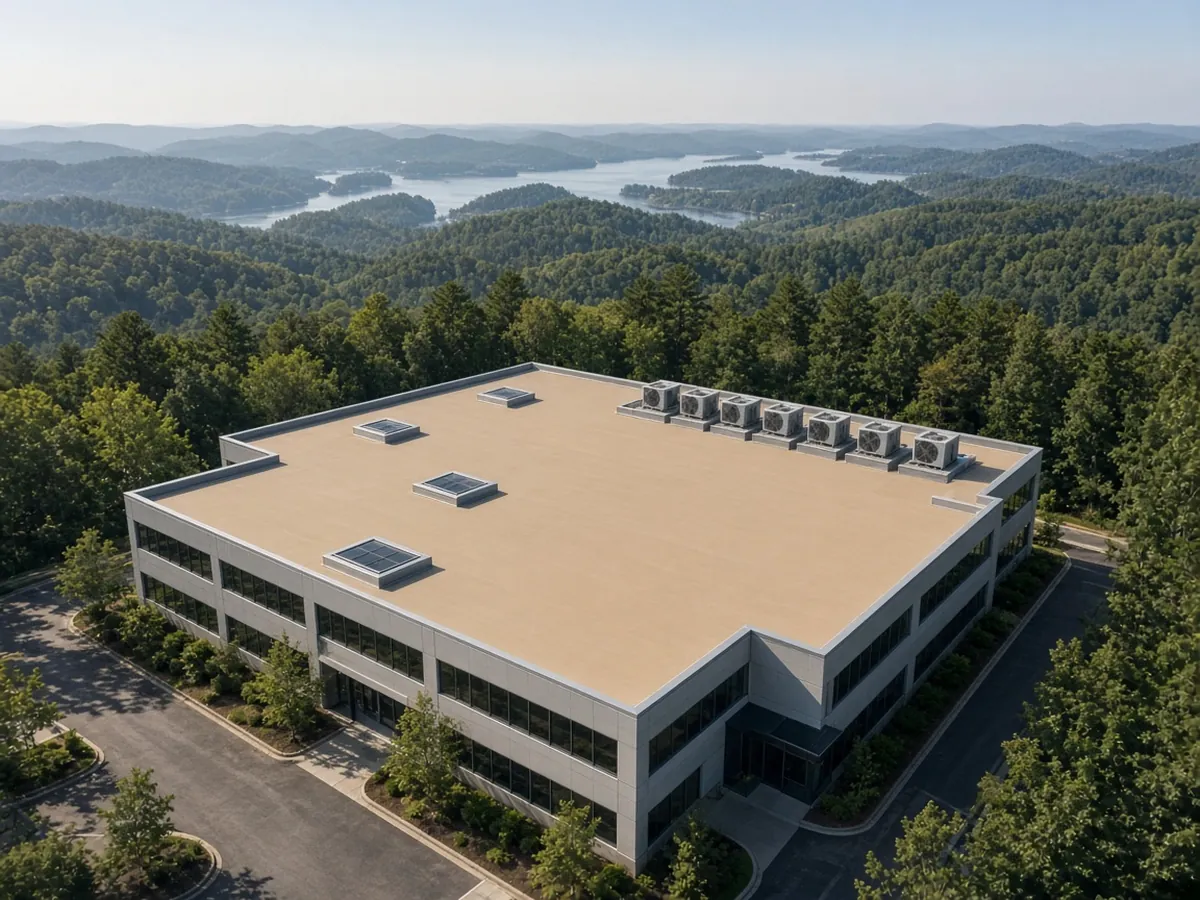
Small commercial roofs along Denver's NC-16 corridor still need to stay dry through lake-country rain without closing the doors for a week. Low-slope work here is planned around customers and the trees growing beside the building.
Retail and office strips near NC-16 are often single story with parapet walls and internal drains. Each bowl is photographed for cracks, debris, and standing water marks after rain.
Older membranes may carry several patches from past leaks. The inspection maps what is original membrane and what was added later so new work bonds to the right layer.
Parking in front of a storefront is limited. Ladder zones, material lifts, and crew vehicles are planned so customers can still reach the main entrance during business hours.
Rooftop units and vent curbs are documented when blistered membrane suggests trapped moisture. That finding is separated from surface wear that only needs cleaning.
Section repairs let staff keep working while one bay of the roof is open. Adhesive-heavy or noisy tasks can be placed around hours you name on the estimate form.
Reports are split by bay or suite when needed, so owners and tenants read only the risk above their ceiling.
Coping joints and parapet corners are checked where lake-country rain drives water into wall cavities instead of off the roof surface.
Tenant complaints about ceiling spots are tied to drainage photos first, because ponding often traces to a clogged leader rather than a torn membrane.
Nighttime condensation on low-slope NC-16 buildings often shows up as interior spots before owners notice exterior splits.
Roofing Lake Norman coordinates timing with owners and managers. Kaliber Roofing crews perform repairs and leave photos with a short written summary.
Ponding stains on ceilings usually mean drains or slopes fail before the membrane does.
Options for coating, patch, or partial replacement are described in plain language without a roofing glossary.
Stock deliveries that run under a leaking low-slope corner are flagged so repairs can phase around receiving hours.
Bowl and leader blockages are addressed before surface patches are proposed.
Work zones avoid main entrances when possible so the business stays usable.
Old repairs are noted so new welds or adhesives bond correctly.
Yes. Sections can be phased so one unit stays open while another bay is repaired.
We document the existing system and recommend compatible repair methods in the written work plan.
We photograph layers we can see and list them so the next repair is not guesswork.
Describe the building and the problem on the estimate form.