
Hands-on soundness
Tabs are flexed and viewed at the eave before anyone discusses rejuvenation products.
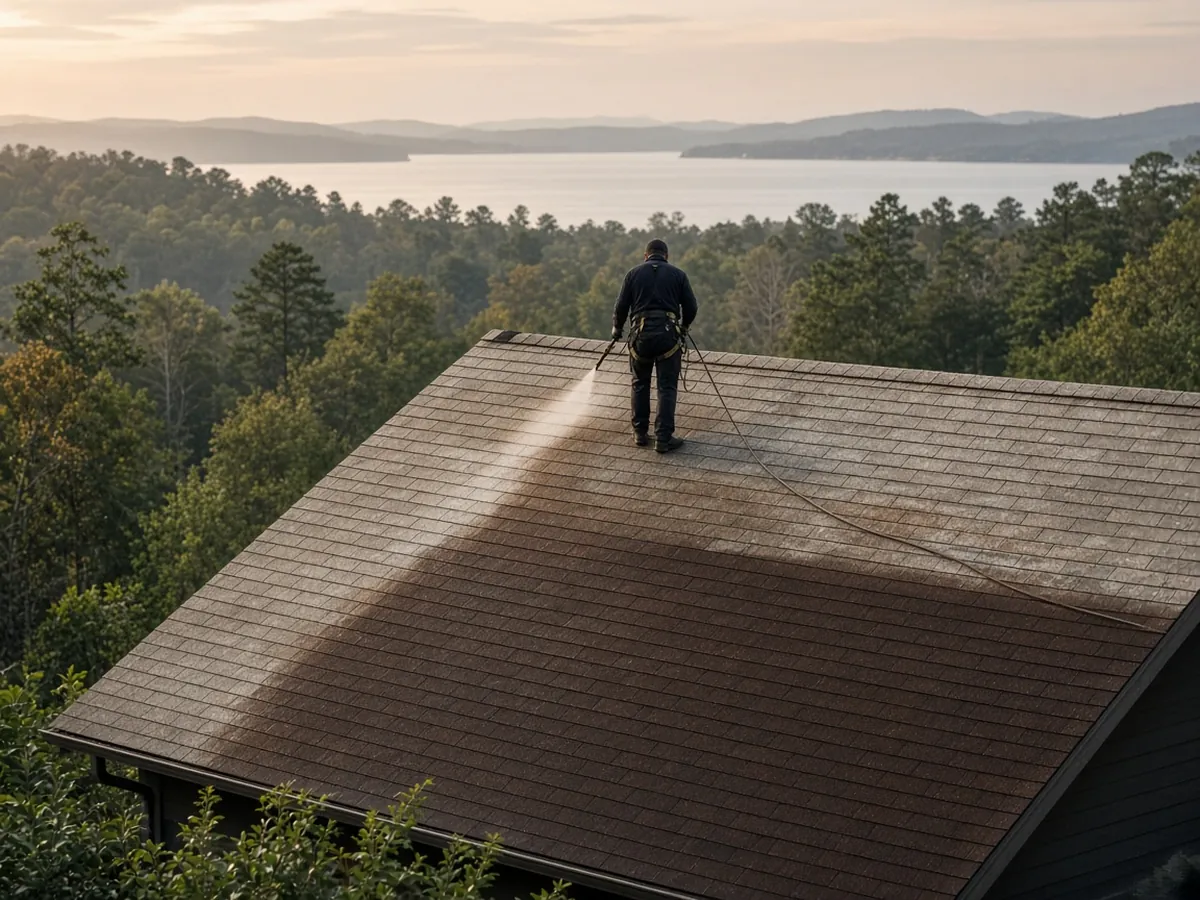
Faded Concord shingles may still be structurally sound on sunny lots without lake humidity slowing drying. A ladder check decides whether surface treatment makes sense.
South slopes on open Cabarrus lots fade fastest. Representative tabs are handled on site to see whether edges crumble or still hold granules.
Street trees downtown shade north faces. Moss and algae are removed before any product talk so bond failures are not blamed on growth alone.
Snapping or cracking tabs fail the check. We decline treatment when tear-off is the honest recommendation.
Active leaks are sealed first. Rejuvenation does not replace flashing work or soft decking.
Widespread granule loss into gutters usually points to replacement rather than oil-based surface treatment.
Slope-by-slope notes explain when one face qualifies and another needs repair or full replacement.
Manufacturer guidance varies by shingle age. Note the brand on the form when you know it.
Curing instructions cover irrigation, pets, and foot traffic after any application on your lot.
Open corridor lots without downtown canopy may qualify on more faces than shaded courthouse-district blocks on the same visit.
Ridge caps and hip shingles are flexed separately because sun exposure can differ sharply between the ridge and lower courses on the same plane.
Roofing Lake Norman schedules the inspection. Kaliber Roofing crews apply treatment only to slopes that pass the on-site check.
Replacement is compared openly when tabs fail the soundness test.
Cosmetic gains are described as such when the roof still sheds water but looks tired from the curb.
Curing notes cover sprinkler zones and sidewalk traffic after any approved application on county-seat lots.
Historic district sight lines are respected when treatment changes curb appearance on visible slopes.
Garage wings with different sun exposure are tested separately so one qualifying slope does not imply the whole roof passes.
Tabs are flexed and viewed at the eave before anyone discusses rejuvenation products.
Algae and moss are washed off shaded downtown slopes before treatment is considered.
Roofs that need tear-off are declined for rejuvenation with reasons listed in the same file.
Often yes inland, but downtown canopy still shades north slopes. The visit labels growth on each face.
No. Seals and metal work are separate items when water is already getting inside.
Color evenness develops over weeks. The plan notes realistic expectations without promising factory-new appearance.
Yes. Slope-by-slope notes explain which faces pass and which need repair or tear-off instead.
Yes when exposure differs. Each plane gets its own pass-or-fail note in the file.
Request an inspection on the estimate form.