
Hail mapped by slope
Bruised tabs and dented metals sit on a simple sketch with the inspection date on each image set.
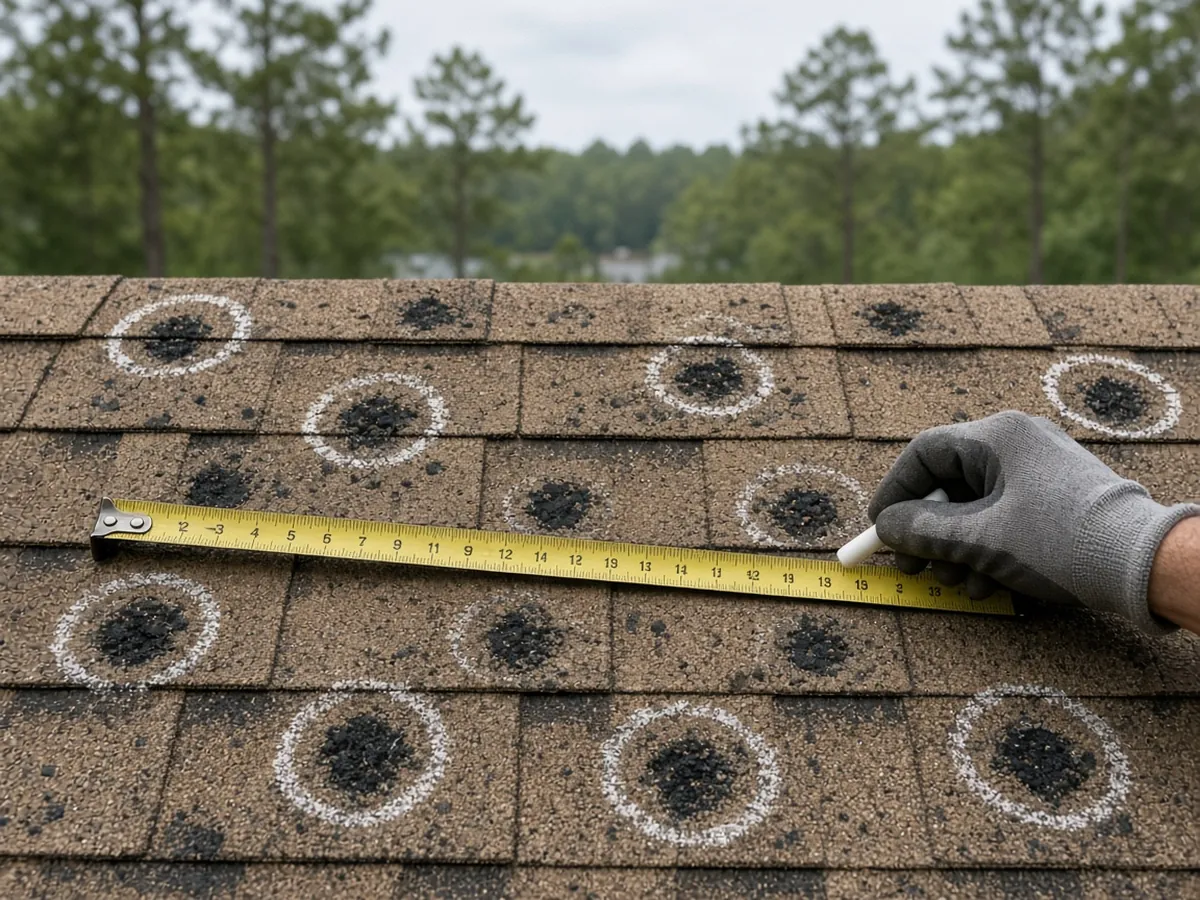
Cabarrus hail tracks need files that show what the last storm did to your roof, not a relabel of granule loss that started years earlier on inland sun.
Soft metals on vents, drip edge, and gutters often bruise before asphalt fields show obvious marks. Those items are photographed early.
Wind creases along roof edges are logged separately from impact bruises so adjusters can read direction and force.
Algae streaks and cupped age on north slopes are labeled as pre-storm wear when they clearly predate the event.
We document conditions only. You and your agent decide whether to file based on carrier rules.
Slope labels in the file match what you see from the yard: front, rear, garage, and any detached structures included on the visit.
When damage is minor, we say so before you spend a deductible on repair-sized problems.
Hail size and pattern notes stay neutral so your agent can pair them with weather reports for the date you provide.
Interior stains are tied to likely entry points when attic trails are visible, without guessing inside finished ceilings.
Detached structures on the same hail path as the house are walked even when damage looks minor from the alley.
Garage doors and soft metals on outbuildings are included when they faced the same hail track as the main roof.
After carrier approval, Roofing Lake Norman schedules restoration work and Kaliber Roofing crews complete repair or replacement per the approved work plan.
Files are yours to share with an agent, adjuster, or lender whether you file or not.
Direction notes explain which elevations faced open wind when that matters to your Concord address.
Porch and garage slopes are labeled on the sketch because inland wind often damages tie-ins before the main field shows creases.
Bruised tabs and dented metals sit on a simple sketch with the inspection date on each image set.
Slow inland wear is not rewritten as storm damage when photos show years of granule loss.
Vents and edge metal often carry the earliest hail signs and are shot before anyone walks field shingles.
Cabarrus sees hail tracks that skip lake towns. We document what hit your address, not regional averages.
We say so clearly and still leave dated photos so you have a baseline for the next storm.
We supply photos and notes. Conversations with carriers stay between you and your agent.
Yes. Dated photos give you a baseline even if you decide to file after the next storm season.
Add the storm date on the estimate form.