
Drainage mapped
Ponding and clogged scuppers are addressed before surface patches.
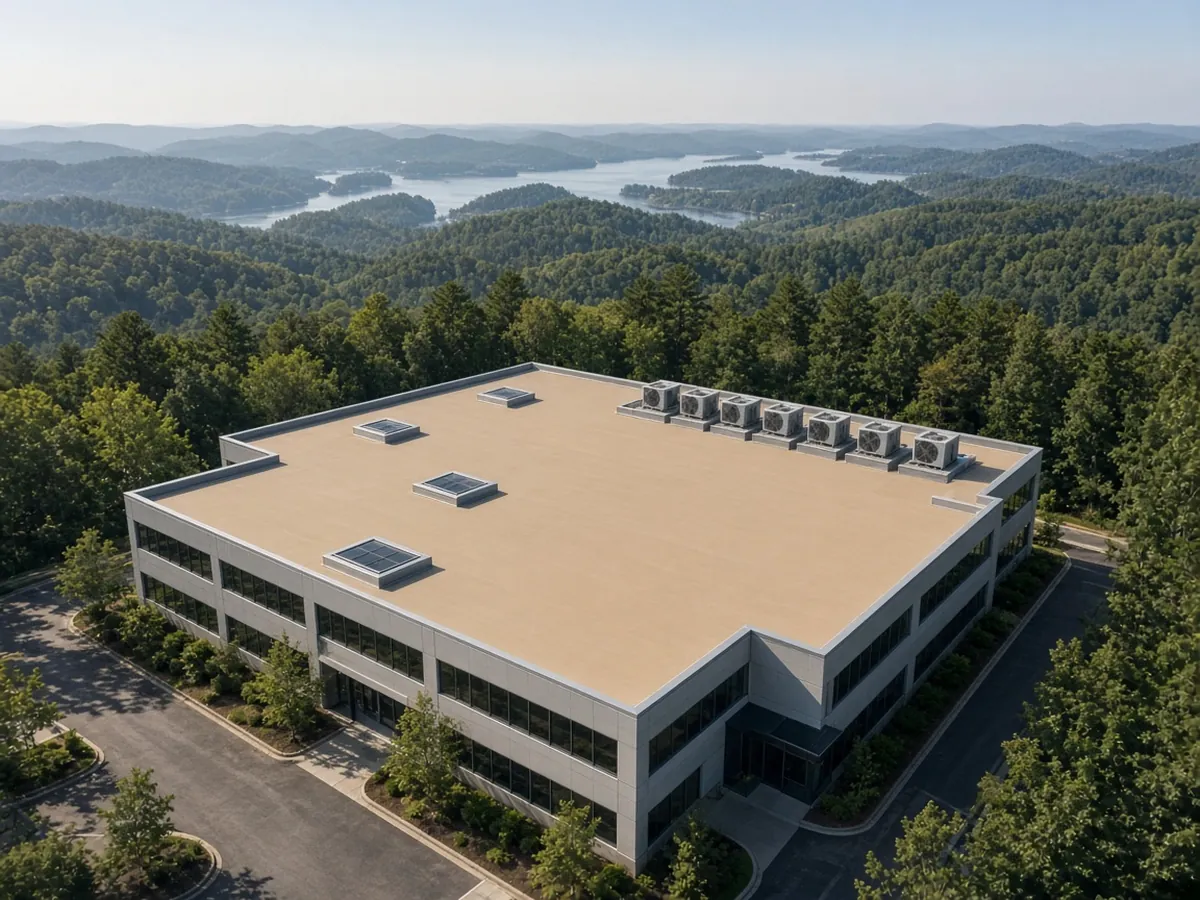
Small commercial buildings near NC-150 in Sherrills Ford rarely have a spare week to shut down. Low-slope work is planned around customers, rural parking, and trees growing beside the roof.
Flat and low-slope roofs along NC-150 collect leaves in drains and corners. Water that cannot leave ponds on the membrane, and ponding is where seams begin to open.
Our first pass checks drainage: where water stands after rain, whether scuppers are clear, and whether coping still sits tight on parapet walls.
Older rural commercial roofs may carry stacked patches. The inspection maps original membrane versus later repairs so new work bonds correctly.
Limited parking and gravel edges affect ladder placement. Crew vehicles and material lifts are planned so customers can still reach the door.
Rooftop units and pipe curbs are photographed when blistered membrane suggests trapped moisture under the surface.
Repairs can move bay by bay so the building stays dry and usable. Noisy or adhesive-heavy tasks align with hours you name on the form.
Winter ice dams are rare here, but packed gutters from pine straw can back water into low-slope corners after a wet week.
Gravel parking edges along NC-150 are noted so ladder setups do not block the only customer path.
Faith Road storefronts with shallow parapets need coping photos because wind-driven rain often enters at the wall joint first.
Acreage shops beside horse barns often share a gravel apron with limited crane access. Low-slope patches are staged from ladders when lifts cannot clear fence lines along Faith Road parcels.
Seasonal lake businesses along NC-150 see roof traffic spike after spring storms. Section repairs are booked around delivery days you name so receiving bays stay dry while one wing is open.
Roofing Lake Norman coordinates with owners. Kaliber Roofing crews perform repairs and leave photos with a short written summary.
Findings are written in plain language so an owner or manager can follow without jargon.
Interior drip pans can mark active leaks while permanent repairs cure on low-slope sections.
Rural customers often enter from a side door, so ladder zones are chosen to keep that path clear.
Ponding and clogged scuppers are addressed before surface patches.
The building stays open while repairs move bay by bay.
Overhanging limbs and packed gutters beside the roof are photographed.
Yes. Name quiet hours on the form and we plan noisy tasks around them.
Yes. Single-tenant and multi-tenant low-slope roofs are both included.
We photograph layers we can see and list them in the report.
Describe the building on the estimate form.