
Wet rooms prioritized
Active interior water drives the first ladder placement before cosmetic dents are quoted.
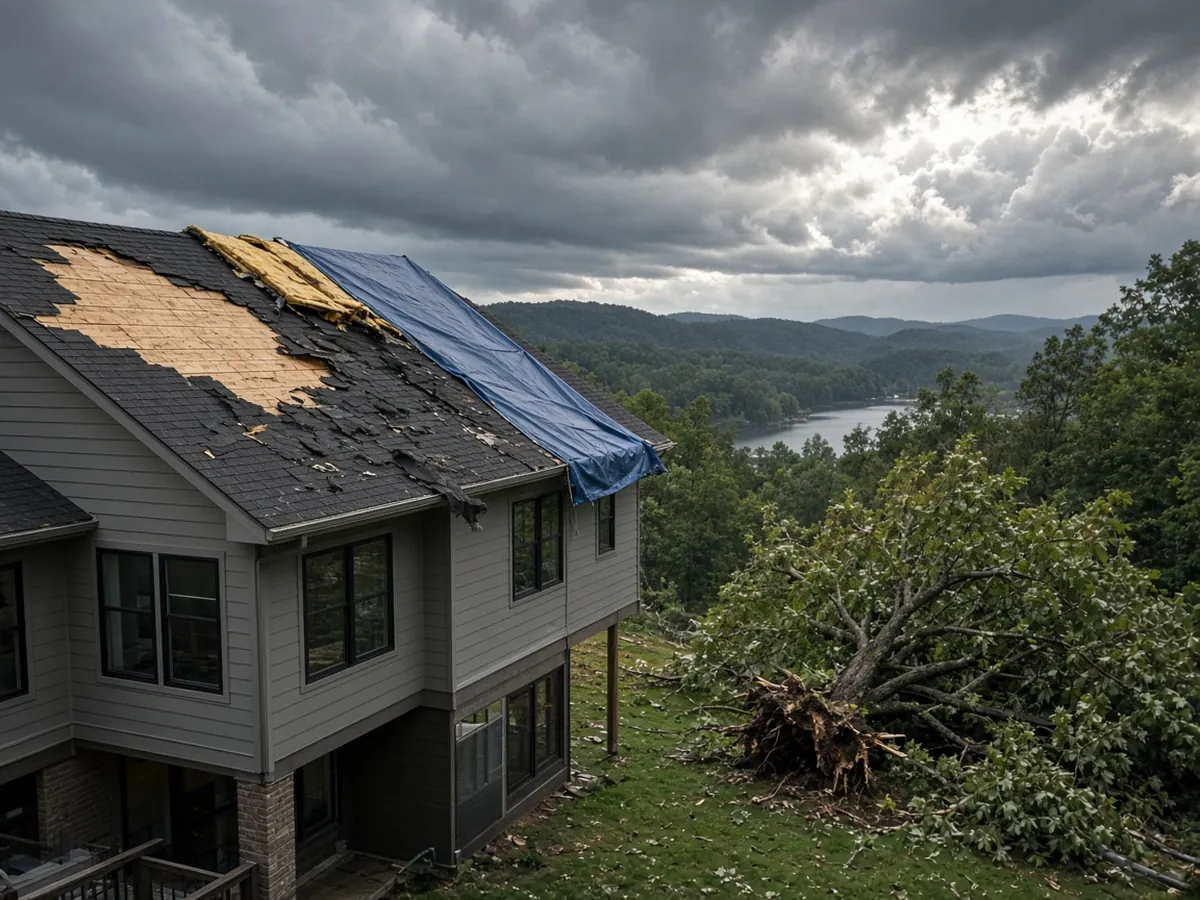
When an oak limb lands on a Davidson ridge or lake gusts peel tabs above brick walks, stopping interior water comes before debating whether every slope needs shingles.
Stay on the ground. Note limb size, lifted tabs, and any active ceiling drip on the estimate form so the crew arrives with harnesses, tarps, and brick-walk protection.
Village streets leave little room for dumpster staging, so emergency covers are planned with carry paths and walk barriers in mind.
Tarps anchor to solid decking or framing members, not loose weight on slick oak litter that slides toward the eave.
A puncture visible from the sidewalk may hide split boards underneath; the inspection probes the deck, not only torn tabs.
Wind off the lake can crease a rear gable while the front toward Main still looks untouched; every elevation gets walked and photographed.
Walnut and oak debris pack valleys behind chimneys, and that mat is cleared before the next shower backs water under shingles.
Gutter lips dented by falling wood are logged beside field repairs so fascia does not keep leaking after tabs are fixed.
Narrow drives and parked cars along brick lanes affect how quickly materials arrive; mention access limits when water is still getting in.
Soft metals on vents and pipe boots are shot up close because bruises there often explain storm timing better than faded field tabs.
Permanent orders follow the written map so you are not buying bundles for slopes that still seal.
Roofing Lake Norman holds the schedule while Kaliber Roofing crews place covers, complete repairs, and leave dated images from first tarp to final course.
If damage stays on one face toward the lake, the plan says so instead of padding unrelated planes.
Busy shingle seasons can delay install; covers are rechecked and you hear what each tarp is doing until dry weather allows permanent work.
Photos from the emergency visit through finish are yours for any Mecklenburg claim you choose to file—or for your own records if you pay out of pocket.
Brick walk edges near ladder setups are protected so storm debris removal does not chip pavers customers use daily.
Active interior water drives the first ladder placement before cosmetic dents are quoted.
Impact zones are probed for splits you cannot see from the yard.
Lake-side and village-side elevations both appear in the repair plan.
No. Let the crew document and remove it so shingle tears underneath stay visible.
No. It protects finished rooms until permanent materials and safe weather align.
Your choice. We organize photos either way.
Yes. Mention tight parking and walk routes so tarps and debris drops respect pavers and plantings.
Note water inside on the estimate form.