
Hose-verified flow
Each section is flushed after scooping, not assumed dry from a glance.
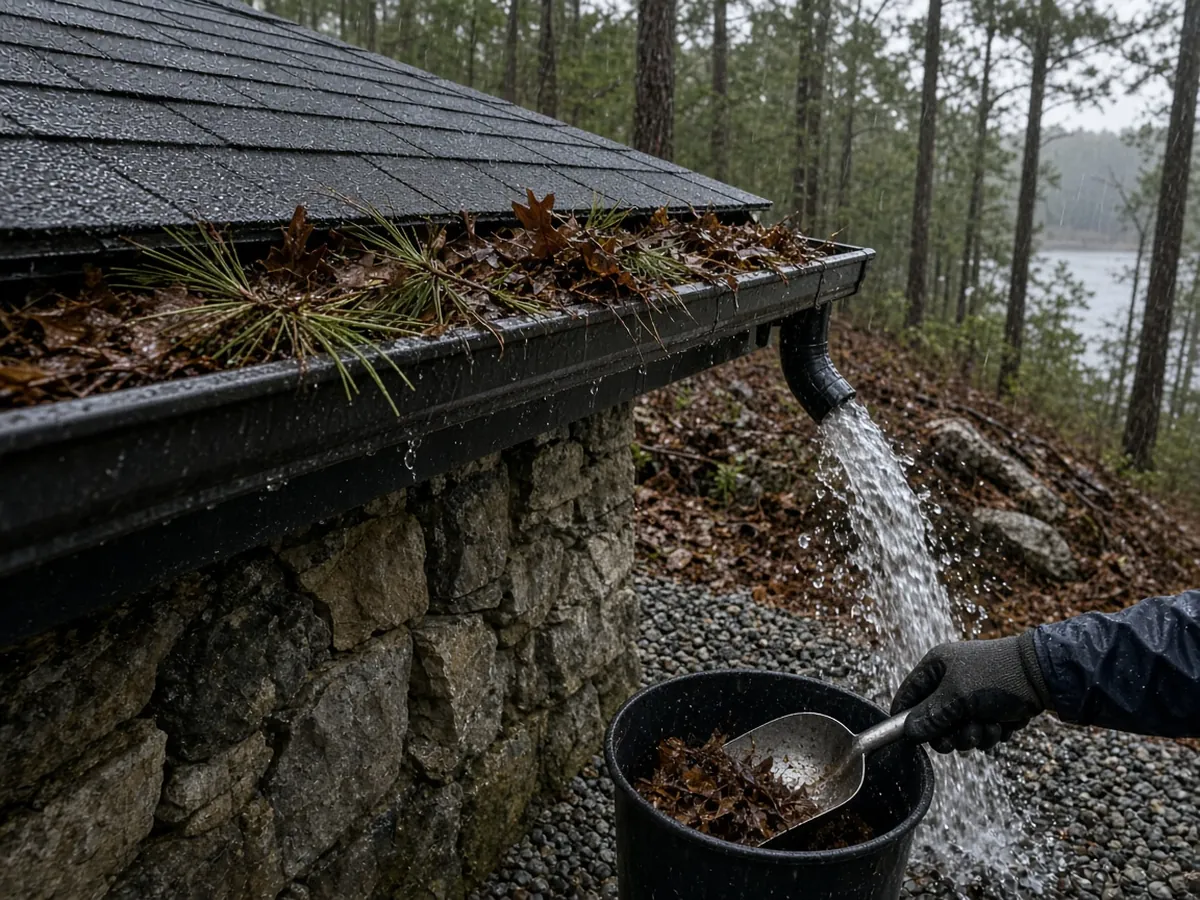
Walnuts, acorns, and oak leaves fill Davidson gutters until water sheets across brick walks and soaks fascia boards that looked fine from the street.
Heavy canopy drops debris into troughs faster than owners expect, and saturated weight pulls hangers through fascia that has been wet for years behind packed channels.
We scoop solids, flush leaders with a hose, and verify pitch so water moves instead of ponding in a mid-run low point invisible from the sidewalk.
Built-in box gutters on older village homes need planned ladder placement away from walk traffic, and those runs get photo notes before screws return.
Downspout ends are checked so discharge clears foundations, terraces, and crawl vents on sloped NC-115 lots.
Overflow frequently pairs clogged metal with lifted first-course shingles; both are judged on the same climb.
Rust-wept miters on aluminum runs are compared honestly with sectional replacement instead of another bead of sealant.
Fascia rot behind long-wet gutters is recorded before fasteners bite into spongy wood.
Valleys that dump a wall of water into a short gutter length are flagged when overflow returns right after cleaning.
Splash blocks and extensions get adjusted so runoff does not sheet across brick paths neighbors share.
Steep eaves above sidewalks need rope setups so debris bags do not drop onto pedestrians during service.
Second-story rear gutters toward the lake clog at inside corners first; those miters are opened fully, not skimmed from the ground.
Roofing Lake Norman books gutter days; Kaliber Roofing crews clean, repair, and list roof-edge issues spotted from the ladder.
Parking along brick lanes is noted so service trucks do not block the only lane neighbors use to reach NC-115.
Pollen mats, spring helicopters, and fall leaf dumps each choke channels at different weeks on the same block.
After one full visit we can suggest how often your tree load needs attention based on what we scooped.
Guards may help but fine oak grit still passes; we explain that trade-off before anyone orders screens.
Overflow stains on limestone steps are traced to discharge angles, not only packed troughs.
Each section is flushed after scooping, not assumed dry from a glance.
Extensions aim away from pavers and planting strips along village routes.
Lifted shingles and soft fascia seen from the ladder go on the same report.
They cut volume, but fine debris still enters. We show what remains after a full clean.
Yes with access planned ahead. Note them on the form so tools match the profile.
Clogged downspouts, sagging hangers, or reversed pitch are common; a flush test sorts which.
Yes. Backed-up water can wick under the first course; we note roof edge condition while clearing.
Tell us on the estimate form.