
Granule-safe wash
Pressure stays low enough to protect architectural shingles on shaded slopes.
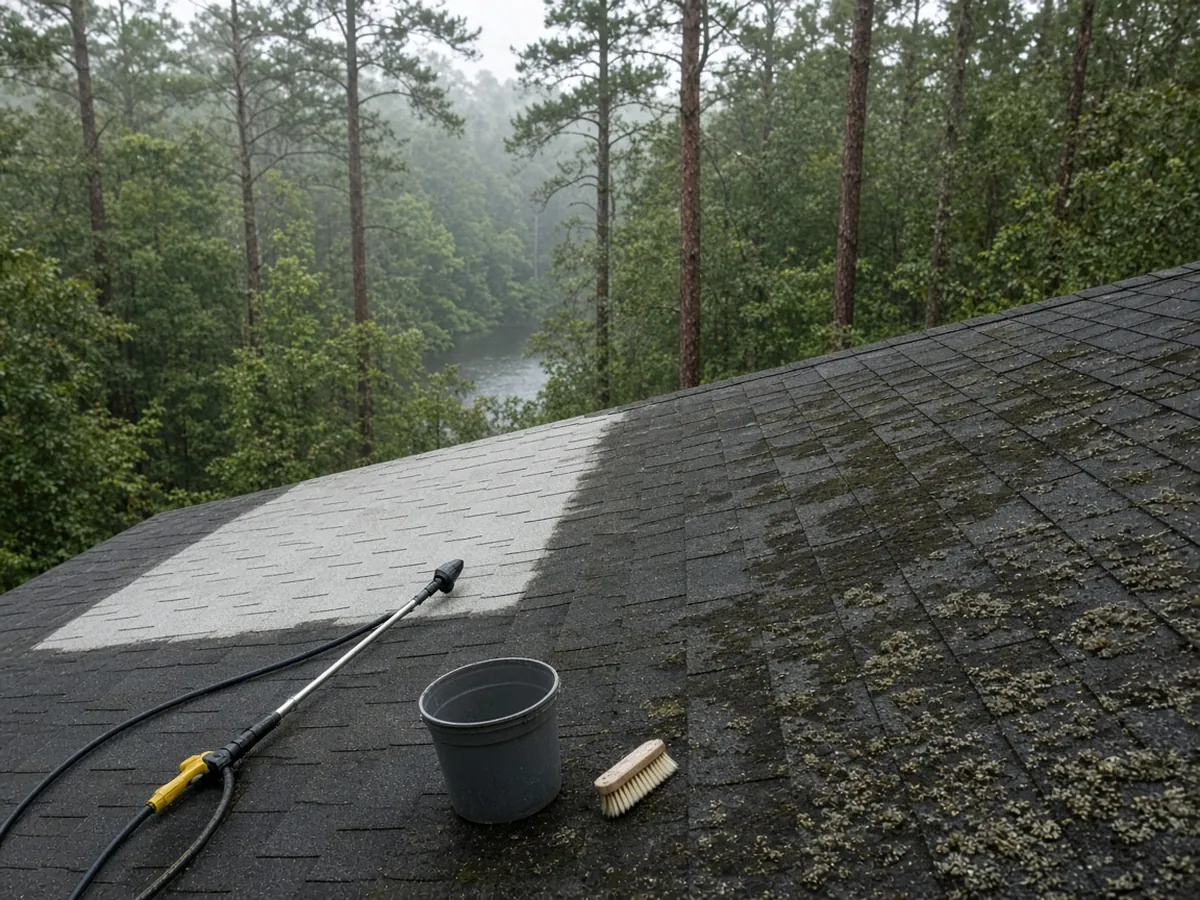
Willow shade along east-shore streets leaves north slopes streaked while lake-facing sides only look sun-bleached. Cleaning clears growth gently and shows whether shingles underneath are tired or still sound.
Humidity after regional storms keeps north slopes damp under shoreline trees, which feeds algae and moss along NC-115 neighborhoods.
Low-pressure methods target growth without blasting granules off architectural courses on 1990s builds.
Walks, beds, and patios are shielded and rinsed so runoff does not stain masonry or plantings near West Catawba corridors.
Before and after photos show whether stains hid cracked tabs or tired flashing that needs repair, not another wash.
Cleaning is maintenance, not leak repair. If water damage is the real issue, the inspection says so plainly.
Pollen mats in spring and leaf debris in fall each leave a different stain pattern. We identify what is on the roof before choosing a method.
Moss can hide brittle tabs at dormers. Growth removal is followed by photos that guide repair quotes if needed.
Trimming branches that overhang the roof helps north slopes dry between humid weeks and slows regrowth.
Roofing Lake Norman books the visit. Kaliber Roofing crews handle the wash and flag active leaks separately from cosmetic stains.
Townhome rows need runoff planned away from shared walks. Those details are on the work order before anyone climbs.
Screened porches under long eaves catch runoff; we tarp those spaces before washing north slopes toward the lake.
Composite decks beside the water stain easily; downspout extensions are checked during cleaning visits on lake-view lots.
Algae on lake-view rear slopes sometimes differs from street-front stains; each face gets its own before photo for HOA records.
Townhome associations along West Catawba sometimes restrict weekend wash hours; we follow the windows you list on the form.
Gutters are flushed after a wash so loosened debris does not dam the next rain.
A short written note lists what the photos showed and what to watch before the next season of growth.
Pressure stays low enough to protect architectural shingles on shaded slopes.
Runoff is kept off shared walks and planted beds during the work.
Hidden cracked tabs and flashing gaps are photographed after growth is gone.
Yes when shingles are sound underneath. The visit states plainly if repair is needed instead.
Shaded roofs often need attention every one to two years. Trimming overhang slows the cycle.
No. Active leaks need repair. The visit separates cosmetic stains from water entry.
Yes when weather allows. Mention your listing date on the form so runoff drying fits the walk-through.
Use the estimate form to request a visit.